Last updated: July 2026. Reviewed by Land-Con’s landscape design team, serving Toronto and the GTA for 25+ years.
Choosing the best landscaping company in Toronto is harder than it should be. A quick search turns up dozens of contractors, each claiming to be the top choice, and most homeowners have no reliable way to tell a genuinely qualified team from one that just has a polished website. This guide walks through exactly how to evaluate a landscaping company in Toronto — the credentials that actually matter, what a project should realistically cost, the municipal rules that change what “qualified” means here, and a scorecard you can use to compare your own shortlist.
Direct Answer: What Makes a Landscaping Company “the Best” in Toronto?
The best landscaping company in Toronto is one that combines verifiable credentials (Landscape Ontario membership, WSIB coverage, liability insurance), a written labour warranty of at least 2–5 years, in-house design-and-build capability rather than subcontracted crews, and a documented track record of recent, verifiable customer reviews across multiple platforms.
No single review site or “top 10” list can fully verify all of this for you. The credentials above are things you can check yourself in a few minutes per company, and doing so tells you more than any ranking article can — because it’s based on your own shortlist, not someone else’s.
How to Actually Evaluate a Landscaping Company in Toronto
Most “how to choose a contractor” advice stops at “check reviews and ask for references.” That’s a start, but it skips the part that actually protects you: knowing how to verify what a company claims about itself.
Landscape Ontario Membership — Verify It, Don’t Just Trust the Badge
Landscape Ontario is the province’s professional association for the industry, and membership requires companies to meet baseline standards of conduct and business practice. The badge itself is easy to display on a website whether or not it’s current. Before you trust it, search the company’s name directly on Landscape Ontario’s public member directory — if they’re not listed there, the badge on their site is outdated or inaccurate.
WSIB Coverage — Ask for the Actual Clearance Certificate
WSIB (Workplace Safety and Insurance Board) coverage protects you from liability if a worker is injured on your property. Any legitimate contractor can produce a WSIB Clearance Certificate on request, generated directly from WSIB’s own online lookup tool — it takes them under a minute. If a company hesitates or can’t produce one immediately, treat that as a serious red flag, not a minor inconvenience.
Liability Insurance — Confirm the Coverage Amount, Not Just That It Exists
“We’re insured” means very little without a number attached. Ask directly for the liability coverage amount (commercial landscaping contractors in Ontario commonly carry $2 million or more) and, for larger projects involving pools or structural hardscape, ask whether that coverage explicitly extends to the type of work being done.
In-House Teams vs. Subcontracted Crews
Some companies market themselves as full-service but subcontract the actual installation to third-party crews. This isn’t automatically bad, but it changes accountability — if something goes wrong, you want to know whether you’re dealing with the company you hired or being redirected to a subcontractor they no longer control. Ask directly: “Is the crew that shows up on-site your employees, or subcontracted?”
Review Verification — Cross-Check Across Platforms, Not Just One
A company with hundreds of reviews on one platform and almost none anywhere else is worth a second look — it can indicate a review drive tied to a single campaign rather than sustained, organic satisfaction over time. Cross-checking Google, HomeStars, and Houzz for a consistent pattern (not necessarily identical numbers, but a similar story) is a stronger signal than any single platform’s rating alone.
What Toronto’s Climate and Municipal Rules Actually Change
Generic “how to choose a contractor” advice applies almost anywhere. A few things specific to Toronto and the GTA genuinely change what a qualified landscaping company needs to know and plan for.
Frost Line Depth and Foundation Work
Ontario’s frost line typically extends to about 1.2 metres (4 feet) below grade. Any structural element — retaining walls, deck footings, pool coping, fence posts — that isn’t installed below this depth risks heaving and cracking after the first hard freeze-thaw cycle. This is one of the most common causes of the “shifted patio” or “cracked retaining wall after one winter” complaints that show up in contractor reviews. Ask specifically how footings are being handled for any structural component of your project.
Tree Protection Bylaws
Toronto’s Private Tree Protection By-law requires a permit before removing or seriously injuring most trees over a certain trunk diameter on private property, and separate rules apply to city-owned trees near your property line. A landscaping company that doesn’t proactively raise this — especially for projects involving grading changes, new hardscape near existing trees, or removals — is either unfamiliar with local requirements or leaving the permit risk entirely on you.
Pool and Structure Permits
Pool installations, and many larger structures like pergolas or cabanas over a certain size, require building permits in Toronto and most surrounding GTA municipalities, along with fencing/enclosure compliance for pools specifically. A company experienced with local permitting will typically handle this as part of the process rather than treating it as a surprise the client discovers midway through.
Drainage and Grading Around Existing Homes
Toronto’s older housing stock, combined with heavy seasonal rainfall, means poor grading is one of the most common sources of post-project regret — water pooling against a foundation, or runoff redirected onto a neighbour’s property. Ask how the company plans to manage grading and drainage before work begins, not after a problem shows up.
Realistic Toronto Landscaping Costs by Project Type
Most guides give a single vague range (“$449 to $20,000+”) that’s technically true but not useful for planning. Here’s a more specific breakdown by project type, based on typical GTA market pricing as of 2026. Treat these as planning ranges, not quotes — actual pricing depends on property access, material choice, and site conditions.
| Project Type | Typical Cost Range (CAD) | Main Cost Drivers |
|---|---|---|
| Interlocking patio or walkway | $15–$35 per sq. ft. | Material grade (concrete paver vs. natural stone), base excavation depth, existing drainage |
| Retaining wall | $40–$120 per linear ft. | Wall height and material (interlock block vs. natural stone vs. armour stone), engineering requirements above 1m |
| Full backyard landscape design + build | $25,000–$100,000+ | Hardscape-to-softscape ratio, structures included (pergola, kitchen, fire feature), grading complexity |
| In-ground pool with basic surround | $60,000–$150,000+ | Pool type (fiberglass vs. concrete/gunite), size, decking material, equipment tier |
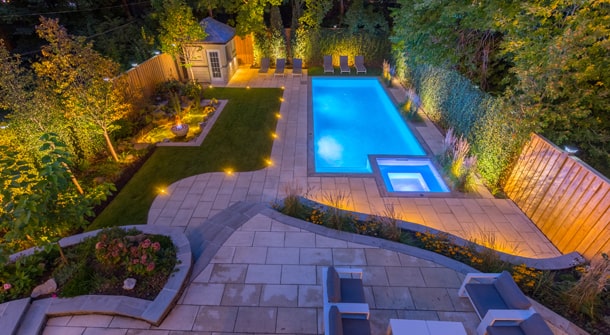
| Pool-integrated landscape design | $15,000–$50,000+ (in addition to pool cost) | Planting scope, lighting, privacy screening, hardscape around the pool deck |
| Deck construction | $35–$75 per sq. ft. | Material (pressure-treated wood vs. composite), height/railing requirements, permit needs |
| Seasonal maintenance program | $150–$500 per visit | Property size, service frequency, scope (lawn care only vs. full garden maintenance) |
A useful gut-check: if a quote for a full backyard design-build project comes in well under $20,000 for anything beyond basic planting, ask specifically what’s excluded — permits, engineering, or grading work is sometimes left out of an initial low estimate and added later as “unforeseen” costs.
Red Flags That Predict a Bad Landscaping Experience
Most “what to avoid” lists just name the red flag without explaining why it matters. Here’s the reasoning behind each one, because understanding the “why” helps you catch variations that aren’t on anyone’s checklist.
No Written, Itemized Quote
A verbal estimate or a one-line total quote gives you nothing to hold the company to if the scope changes. An itemized quote — broken down by material, labour, and specific deliverables — is what lets you identify scope creep later and dispute charges that weren’t part of the original agreement.
Reluctance to Provide Proof of Insurance or WSIB Coverage
This isn’t paperwork for its own sake — if an uninsured worker is injured on your property, you as the homeowner can be held liable. A company that hesitates here is often either uninsured or aware their coverage doesn’t match what they’re claiming.
Pressure to Sign Quickly or Pay Large Deposits Upfront
Substantial upfront deposits (beyond a reasonable materials deposit) combined with urgency (“this price is only good today”) is a classic pattern associated with companies that struggle with cash flow or don’t plan to be around for warranty claims.
No Recent, Verifiable Reviews
A portfolio of five-year-old projects and reviews with no recent activity tells a different story than consistent feedback over the past 12 months. Landscaping quality — especially hardscape work — often only reveals problems after a full freeze-thaw cycle, so recent reviews matter more than total volume.
Vague Answers About Permits
If a company brushes off permit questions (“don’t worry about it, everyone skips that”), that’s not confidence — it’s a liability being quietly transferred to you. Unpermitted structural work can create real problems at resale or insurance claim time.
A Practical Scorecard for Comparing Quotes
Rather than relying on someone else’s pre-made ranking, use this scorecard on your own shortlist of 3–4 companies. Score each item 0–2 (0 = not met, 1 = partially met, 2 = fully met) and compare totals.
| Criteria | What to Check | Score (0–2) |
|---|---|---|
| Verifiable Landscape Ontario membership | Confirmed on the official member directory, not just a website badge | |
| WSIB clearance certificate provided | Produced on request, matches company name exactly | |
| Insurance coverage confirmed with amount | Specific dollar figure given, covers the type of work quoted | |
| Written, itemized quote | Broken down by material and labour, not a single lump sum | |
| Written labour warranty | Specific length stated in writing (2+ years minimum) | |
| Recent reviews across 2+ platforms | Activity within the last 12 months, consistent story across sites | |
| Clear answer on permits and drainage | Proactively raised without being asked, not dismissed | |
| In-house vs. subcontracted crew clarified | Direct answer given, not deflected |
A company scoring 12+ out of 16 across your shortlist has cleared the practical bar for a low-risk hire. Anything scoring below 8 deserves a second conversation before moving forward, regardless of how the initial design pitch looked.
What a Strong GTA Landscaping Track Record Looks Like
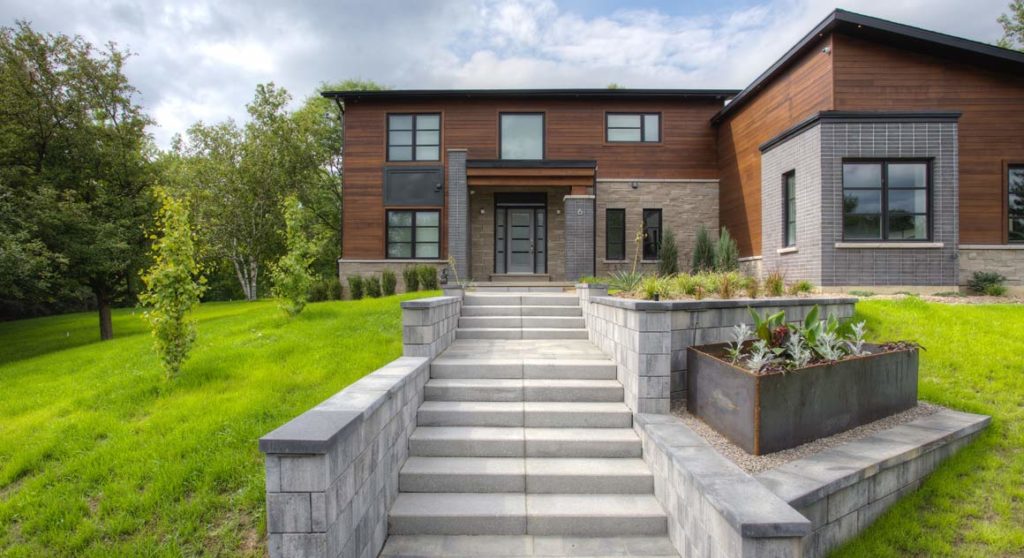
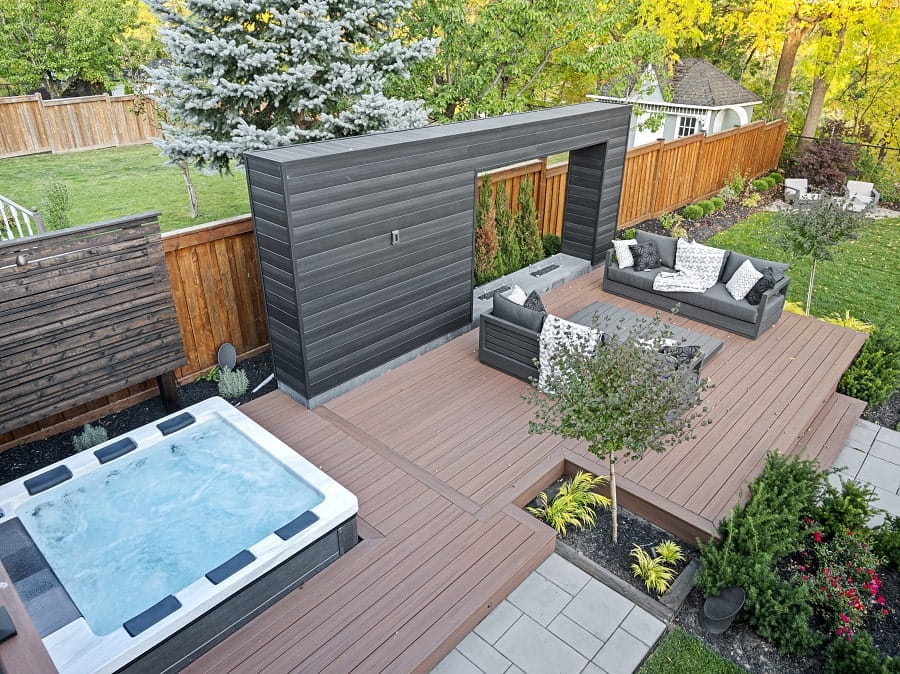
To make the criteria above concrete rather than abstract, it’s worth looking at what they mean in practice for an established local firm. Land-Con has operated as a landscaping company in Toronto for over 25 years, holds current Landscape Ontario membership, and runs design, construction, and pool installation as an in-house team rather than through subcontracted crews — the same specific factors outlined in the evaluation section above.
That combination — verifiable credentials, one accountable team from design through handover, and a service area spanning Toronto, Vaughan, Richmond Hill, Aurora, Markham, Etobicoke, and Mississauga — is a useful reference point for what “clears the bar” looks like when you’re running your own shortlist through the scorecard above. It’s one example among several qualified GTA firms, not a claim of being the only option; the point of this guide is giving you the tools to judge that for yourself.
Choosing With Confidence
Finding the best landscaping company in Toronto isn’t about picking whichever name appears first in a search result or a “top 10” list — it’s about running a short, specific verification process: confirm the credentials that actually protect you, understand what your specific project should realistically cost, ask about the Toronto-specific factors (frost depth, tree bylaws, permits, drainage) that generic advice skips, and score your actual shortlist against a consistent set of criteria rather than trusting a stranger’s pre-made ranking. Do that, and the “best” company for your project becomes obvious pretty quickly — because it’ll be the one that has clear, verifiable answers to every item on the scorecard, not just the best-looking website.
Frequently Asked Questions
How much does landscaping cost in Toronto?
Costs vary widely by project type — interlocking runs roughly $15–$35 per square foot, while a full backyard design-build project typically ranges from $25,000 to $100,000+ depending on scope. See the cost table above for a breakdown by specific project type rather than a single blended average.
Do I need a permit for landscaping work in Toronto?
It depends on the project. Pool installations and larger structures typically require building permits, and tree removal or injury to protected trees requires a permit under Toronto’s Private Tree Protection By-law. Routine planting, sod, and small garden work generally don’t require permits, but grading changes near property lines can trigger drainage-related approval requirements.
How do I verify a landscaping company’s credentials in Toronto?
Search the company’s name directly on Landscape Ontario’s public member directory rather than trusting a website badge, request a current WSIB Clearance Certificate (generated from WSIB’s own lookup tool), and ask for the specific dollar amount of their liability insurance coverage.
What’s a reasonable warranty length for landscaping work?
A written labour warranty of at least 2 years is a reasonable baseline for most residential landscaping work; larger structural or pool-integrated projects often carry longer terms. Always get the specific length in writing rather than accepting a verbal “we stand behind our work.”
Should I choose the lowest quote I receive?
Not automatically. Use the itemized breakdown to compare what’s actually included — a lower total that excludes permits, engineering, or specific materials can end up costing more once those gaps surface mid-project. The scorecard above is designed to help you compare value, not just price.
How far in advance should I book a landscaping project in Toronto?
Spring and early summer (April through June) are the busiest booking periods for GTA landscaping companies, so scheduling a consultation 6–8 weeks ahead of your preferred start date gives you the best chance of securing it, particularly for larger design-build or pool-integrated projects.
Ready to Start Your Project?
If you’re comparing landscaping companies in Toronto and want to talk through your project with a team that meets every item on the scorecard above, Land-Con offers free consultations across Toronto, Vaughan, Richmond Hill, Aurora, Markham, Etobicoke, and Mississauga. You can also explore our complete guide to landscaping services or, for pool-adjacent projects, our approach to pool-integrated landscape design.
Call 416.504.5263 or email info@landcon.ca for a free consultation.