

Written by Ofer Winkler, co-founder of Land-Con | Landscape Ontario and BILD member, ICPI certified | Last updated:
Quick answer: Check landscape lighting twice a year, in spring and fall. Clean the lenses, trim plants away from fixtures, re-aim anything that has shifted, replace failed bulbs or modules, and inspect cable and connections for damage. In winter, reset timers for early sunsets, mark fixtures before snow clearing and check the system after heavy snow.
Landscape lighting is built to stay outdoors, but it is not maintenance-free. Dirty lenses dim the light, plants grow into beams, frost moves fixtures and snow clearing damages the ones nobody marked. A short routine twice a year keeps the system bright, safe and aimed where you planned it.
This guide is the upkeep checklist, with a seasonal schedule and a section on Ontario winters. If you are still planning a system, start with our guide to how outdoor lighting installation works.
In this guide
- What Damages Landscape Lighting
- Seasonal Maintenance Schedule
- The Inspection Checklist
- Winter Lighting Care in Ontario
- Troubleshooting Common Problems
- When to Call a Professional
- FAQ
What Damages Landscape Lighting?
- Weather. Freeze-thaw cycles, heavy rain, wind and snow load move fixtures and strain connections.
- Dust, dirt and insects. A film on the lens or reflector dims and scatters the light.
- Plant growth. Shrubs, grass and tree limbs cover fixtures and tug on cable.
- Dry rot and wear. Cable insulation and connectors degrade over the years.
- Animals. Rodents sometimes chew on cable.
- Impact. Mowers, shovels, plows and feet hit ground-level fixtures.
- Overdue care. Small problems such as a loose connection or a fixture full of water become failures.
Damaged cable matters most. The fixtures run at low voltage, but the transformer and the outlet that feeds it carry household current, so cut or frayed cable should be treated with care.
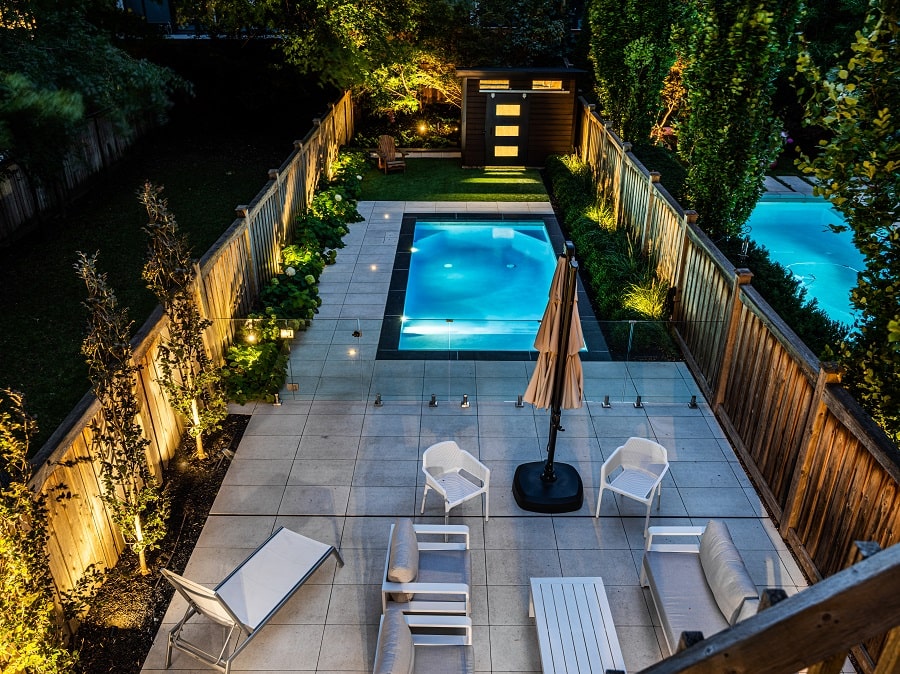
Seasonal Landscape Lighting Maintenance Schedule
- Spring. Look for fixtures that frost pushed out of alignment, check connections for corrosion, clean lenses and test the GFCI outlet. Re-aim fixtures that shifted, and trim new growth.
- Summer. Trim plants from beams, wipe lenses after storms and dust, and check that the timer matches the shorter evenings later in the season.
- Fall. Do the main inspection before the ground freezes. Repair and re-bury any exposed cable, replace failing bulbs or modules, clear leaves from fixtures and drains, and re-aim lights now that trees are bare.
- Winter. Mark fixtures before snow clearing, reset timers, and check the system after heavy snowfall or ice.
Outdoor Landscape Lighting Inspection Checklist
Switch the power off at the GFCI outlet or the transformer before you handle cable, and switch it back on to test.
1. Clean the Lenses and Reflectors
Dirty or cloudy lenses and reflectors, the area around the bulb, spread light unevenly. Wipe off dust, grime, water spots, insects and cobwebs with a soft damp cloth, and avoid abrasive pads that scratch the lens. Clean LED fixtures after heavy snowfall, since LEDs stay cooler than halogen bulbs and do not melt snow on their own.
2. Clear the Area Around Each Fixture
Trim grass, shrubs and tree limbs that cover fixtures or press on cable. If water pools around a fixture, fill the low spot and improve the drainage, because standing water near fixtures and connections shortens their life.
3. Inspect the Fixtures
Look for dents, corrosion, cracks and fixtures that have been stepped on or hit. Ground-level fixtures take the most abuse. Replace badly damaged fixtures even if they still light, and match the replacement to the system’s rating.
4. Replace Failing Bulbs or LED Modules
Replace anything that is dim, flickering or near failure before it goes out in the middle of the night. If you still have halogen fixtures, LED replacements use less energy and last far longer.
5. Re-Aim the Fixtures
Storms, frost, snow clearing, pets and children all knock fixtures out of line. Check that each one lights what it was meant to light and does not shine into eyes, a neighbour’s window or the street. Most stake-mounted fixtures can be re-aimed in seconds. For design reasons behind aim and layering, see our guide to planning landscape lighting.
6. Check Cable and Connections
Look for exposed copper, cuts, chew marks and loose or corroded connections. Re-bury cable that has surfaced. Leave a little slack in each run so frost movement does not pull connections apart. Call a professional for frayed or cut cable.
7. Check the Transformer, Timer and Outlet
Confirm that the transformer is dry, mounted off the ground and not buried in snow or mulch. Test the GFCI outlet using the test and reset buttons, and make sure the timer or photocell matches the season.

Landscape Lighting Care in Ontario Winters
Winter nights are long, so lighting works more hours, and snow, ice and road salt put it under more strain. These steps cover the season.
Before the Ground Freezes
Walk the property and check for exposed copper or cut cable. Repair and re-bury it now, because once the ground freezes and then thaws, water and electrical connections end up in contact. Replace failing bulbs, since fixtures run longer hours in winter.
Mark Your Fixtures
Path and driveway fixtures take a beating during snow removal. Mark them with stake flags or reflectors so shovels, snow blowers and plows can avoid them. Where drifts form, consider taller fixtures, and keep low fixtures out of plow paths where you can.
Reset the Timer
Sunsets come early, and a summer schedule leaves you in the dark at dusk. Reset clock timers for the season and again when the clocks change. A photocell adjusts on its own.
Check After Heavy Snow
Clean lenses after heavy snowfall, clear snow that has buried low fixtures and make sure fixtures have not been pushed out of aim by the weight of snow. Rinse salt spray from fixtures near driveways when the weather allows.
Adjust the Lighting for Bare Trees
After the leaves fall, uplit deciduous trees look different. Turn down or re-aim uplights on bare branches, and shift the focus to evergreens, stone, paths and entries.
Light the Routes You Use
In winter, lit steps, walkways, doors and driveway edges make icy conditions easier to read. Check for dark spots on the routes you use after dark. Our post on using outdoor lighting to improve property safety covers where lighting helps most.
Troubleshooting Common Landscape Lighting Problems
- One light is out. Check its connection and its bulb or module.
- A whole run is out. Look for a cut cable or a loose connection, and check the transformer.
- The whole system is out. Check the GFCI outlet, the timer or photocell and the transformer.
- The last lights on a run are dim. Voltage falls along long runs, so the far end gets less. A long run may need heavier cable or a split into two runs.
- The GFCI keeps tripping. Moisture in a connection or fixture is a common cause. Switch the power off and check connections and fixtures for water.
- Lights come on at the wrong time. Reset the timer, or check the photocell for dirt or shade.
If you use solar fixtures, the same cleaning and aim checks apply, and shaded panels charge less in winter. Our comparison of solar and wired LED lighting explains the difference.
When to Call a Professional
Cleaning, trimming, re-aiming and replacing a bulb or module are straightforward DIY jobs. Call a professional for cut or frayed cable, transformer work, anything involving 120-volt wiring, lighting near a pool or water feature, and systems that need redesign because the landscape has changed. If your system needs a redesign or an upgrade, see our landscape lighting design and installation service.
Frequently Asked Questions About Landscape Lighting Maintenance
How often should I maintain landscape lighting?
Plan a full check twice a year, in spring and fall, plus a quick look after heavy storms and after the first big snowfall. Wipe lenses and trim plants a couple of times a season, and reset the timer when the clocks change.
How do I clean outdoor light fixtures?
Switch the power off, then wipe the lens and reflector with a soft damp cloth to remove dust, cobwebs, insects and grime. Avoid abrasive pads, which scratch lenses. Dry the lens, and check that water has not collected inside the fixture.
Why is one of my landscape lights flickering or out?
Start with the simple causes: a loose connection, a failed bulb or LED module, or a damaged cable. If a whole run is out, check the cable for a cut and the connection at the transformer. If the whole system is out, check the GFCI outlet, the timer or photocell and the transformer.
How do I protect landscape lighting from snow removal?
Mark fixtures along paths and driveways with stake flags before the ground freezes, so shovels and plows can avoid them. Keep fixtures out of plow paths where you can, and use taller fixtures where snow drifts.
Do I need to change the timer for winter?
Yes. Sunsets come much earlier, so a timer set in summer leaves the yard dark at dusk. A photocell adjusts on its own. If you use a clock timer, reset it for the season and again when the clocks change.
What should I do if I find exposed or damaged cable?
Switch the power off at the GFCI outlet or the transformer. Low-voltage cable carries far less voltage than household wiring, but the transformer and its outlet do not, so treat the repair carefully. Re-bury sound cable, and call a professional for frayed or cut cable, or if you are unsure.
Should I leave landscape lighting out all winter?
Fixtures rated for outdoor use are designed to stay out. Check them before the ground freezes, then look again in spring for fixtures that shifted with frost and re-aim them.
How long do LED landscape fixtures last?
LED fixtures last much longer than halogen or incandescent bulbs, so bulb changes are rare. The parts that fail first are usually connections, cable and fixtures that were damaged, which is why inspections matter more than bulb changes.
Should I change lighting after the leaves fall?
It helps. Bare branches look different when uplit, so many people re-aim or turn down uplights on deciduous trees and shift the focus to evergreens, stone, paths and entries.
Can I maintain landscape lighting myself?
Cleaning, trimming plants, checking aim and replacing a bulb or module are reasonable DIY jobs. Cable repair, transformer work and anything involving 120-volt wiring or a pool or water feature are better left to a professional.
Need Help With Your Landscape Lighting?
If your lighting needs a check, a repair or a redesign, book a free consultation, call 416.504.5263 or email info@landcon.ca.
Ofer Winkler and Jeremy Lerner are the co-founders of Land-Con Ltd., a Toronto-area landscaping and luxury pool design and build company they built together in 2010. Both have worked in the landscape industry since 1997.