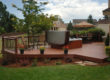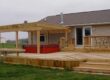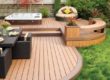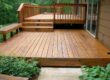
Choosing the right material for a new deck is one of the biggest decisions in any backyard project. Many homeowners start with inspiration for beautiful deck designs, then quickly realize that the real question is more practical: should the deck be built with composite boards or pressure-treated wood?
That choice affects more than appearance. It influences cost, maintenance, comfort, durability, and how well the space fits your long-term plans for outdoor living spaces and a larger backyard renovation.
For most Toronto homeowners, composite is the better option when low maintenance, long-term appearance, and durability matter most. Pressure-treated wood is usually the better option when a lower upfront cost and a more traditional wood look matter more. The right choice depends on your budget, how much upkeep you can realistically handle, and how you want to use the deck over the next 10 to 20 years.
If you are comparing materials before moving ahead with deck installation, this guide breaks down the real differences in a practical, local way so you can make a smarter decision before speaking with deck builders Toronto homeowners trust.
Why Deck Design and Material Choice Matters More in Toronto
A deck in Toronto does not deal with mild, steady weather year-round. It deals with rain, humidity, direct summer sun, freezing temperatures, snow buildup, and repeated freeze-thaw cycles. Those conditions can expose weaknesses in both materials and installation quality.
That is why the material decision should never be based on showroom appearance alone. A deck that looks great on day one may behave very differently after a few Toronto winters.
When homeowners compare material types, they should look at five factors first:
- Upfront installation cost
- Long-term maintenance
- Weather performance
- Appearance over time
- Total value over the life of the deck
A good deck is not only about nice deck designs. It is about how the surface, framing, fasteners, drainage, and layout work together in real backyard conditions.
What Is the Difference Between Composite and Pressure-Treated Wood?
Composite decking is an engineered decking material typically made by combining wood particles or fibres with plastic-based components to create a more durable, low-maintenance surface.
Pressure-treated wood is natural lumber that has been chemically treated to resist rot, moisture damage, and insect activity. It remains a common choice because it costs less upfront and delivers a classic wood look.
Here is a simple comparison:
| Feature | Composite Decking |
Pressure-Treated Wood |
| Material type | Engineered product | Natural wood |
| Upfront cost | Higher | Lower |
| Maintenance needs | Low | Moderate to high |
| Appearance | Uniform and consistent | Natural wood character |
| Risk of splinters | Low | Higher over time |
| Lifespan | Longer in many cases | Shorter without upkeep |
| Best for | Long-term convenience | Budget-focused projects |
Neither option is automatically right for every property. The best fit depends on how the deck will be used, what look you want, and how much maintenance you are prepared to do.
Which Material Performs Better in Toronto Weather?
In Toronto’s climate, composite usually performs better from a surface-maintenance perspective. It does not absorb moisture the same way wood does, and it is less likely to crack, splinter, or warp as the seasons change.
Pressure-treated wood can still perform well, but it usually needs more attention. Over time, boards may shrink, split, cup, or show wear faster if they are not properly sealed, cleaned, and maintained.
Moisture and Freeze-Thaw Exposure
Moisture is one of the biggest stress points for outdoor structures in Southern Ontario. Water can sit on deck surfaces, collect around fasteners, or remain trapped in shaded areas. Once temperatures drop, that moisture can expand and worsen surface damage.
Composite boards generally handle this cycle more predictably. Pressure-treated wood is more vulnerable to movement as it dries and ages.
Sun and Colour Fading
Toronto summers can be hard on exposed deck surfaces. Wood often fades and weathers unevenly unless it is stained or sealed consistently. Composite also changes over time, but many homeowners prefer its more stable colour performance.
Mould and Algae Concerns
Neither material is immune to buildup in damp, shaded backyards. If leaves, dirt, and moisture collect on the deck, both materials can become slippery or look worn. Good drainage, proper airflow, and regular cleaning matter regardless of what material you choose.
Upfront Cost vs Long-Term Value
For many homeowners, price is the first deciding factor. Pressure-treated wood almost always wins on initial cost. That is why it remains popular in budget-conscious deck installation projects.
But upfront savings do not always mean lower long-term costs.
Typical Cost Pattern
Composite decking usually costs more at the start because the boards themselves are more expensive. Depending on design complexity, railing choices, stairs, and framing needs, the initial difference can be significant.
Pressure-treated wood usually reduces entry cost, which makes it appealing for:
- First-time deck projects
- Tighter renovation budgets
- Simple backyard layouts
- Homeowners focused on immediate function
Example of long-term ownership cost
Imagine two similar decks built for the same backyard.
| Cost Factor Over 10 Years | Composite Deck | Pressure-Treated Wood Deck |
| Initial installation | Higher | Lower |
| Annual cleaning | Low | Low to moderate |
| Staining / sealing | Rare or none | Recurring |
| Surface repairs | Lower likelihood | More likely |
| Board replacement | Less common | More common |
| Long-term upkeep | Lower | Higher |
A homeowner who saves money upfront on wood may later spend on:
- Staining or sealing every few years
- Sanding rough sections
- Replacing cracked or warped boards
- Cosmetic repairs to restore appearance
That does not mean wood is the wrong option. It simply means the cheaper option at installation can become more expensive over time, depending on care and exposure.
Get a Custom Deck Quote!
Maintenance: What Will Real Upkeep Look Like?
This is where many homeowners underestimate the difference.
Composite is low maintenance, but not no maintenance. It still needs seasonal cleaning, debris removal, and occasional washing to prevent dirt buildup and surface staining.
Pressure-treated wood usually needs more hands-on care. In real terms, that can include:
- Regular washing
- Staining or sealing on a recurring schedule
- Sanding rough or splintering areas
- Checking for loose boards or raised fasteners
- Monitoring weathered sections more closely
If you enjoy the character of natural wood and do not mind some upkeep, that maintenance may feel reasonable.
If you want a deck that stays cleaner-looking with less annual effort, composite is usually the more practical choice.
Best Fit by Maintenance Tolerance
|
Homeowner Preference |
Better Fit |
| Wants very low upkeep | Composite |
| Does not mind periodic sealing and refinishing | Pressure-treated wood |
| Wants a clean, consistent finish for entertaining | Composite |
| Prefers a natural wood feel and appearance | Pressure-treated wood |
For busy families, professionals, and homeowners planning premium outdoor living spaces, composite often makes more sense simply because it asks less of the owner year after year.
Which Material Looks Better?
The answer depends on what matters most to you.
Some homeowners want the warmth and character of real wood. Others want a cleaner, more refined finish that holds its look with less effort.
Pressure-treated wood has a natural texture that many people still prefer. It can suit more traditional yards, cottage-inspired aesthetics, or homes where a natural material palette matters.
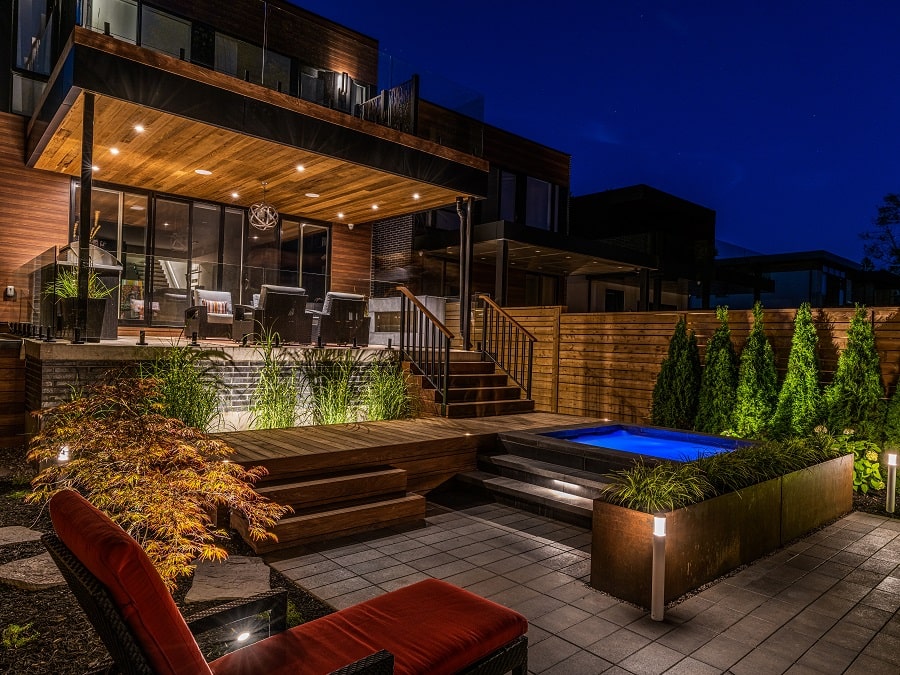
Composite offers more consistency. It works especially well in modern deck designs, low-maintenance backyards, and projects where the deck connects to features like privacy walls, built-in seating, lighting, or outdoor kitchens.
Appearance Over Time Matters Too
The better-looking option on day one may not be the one you like most five years later.
Pressure-treated wood can:
- Fade unevenly
- Develop cracks
- Show more visible wear
- Lose its finished look if upkeep is delayed
Composite typically holds a more uniform look over time, which makes it attractive in higher-end backyard renovation projects.
Durability and Lifespan
Durability is not just about the board material. It is also about structure, drainage, ventilation, fasteners, and installation quality.
That said, the decking surface still matters.
Common Long-Term Issues With Pressure-Treated Wood
- Splintering
- Cracking
- Shrinking
- Warping
- Surface roughness
- Visible weathering
Common Long-Term Issues With Composite
- Scratching from furniture or dragging heavy objects
- Heat retention, especially in darker colours
- Expansion concerns if installed incorrectly
Composite usually wins on lifespan and surface stability. Pressure-treated wood can still last well, but performance depends much more heavily on maintenance and exposure conditions.
This is one reason professional deck installation matters so much. A poor substructure, a weak drainage plan, or a shortcut in fastening can shorten the life of either material.
Which Material Is Better for Different Homeowners?
The best way to choose is to match the material to the homeowner, not only the product brochure.
Choose Pressure-Treated Wood If You:
- Need a lower upfront project cost
- Like the natural appearance of real wood
- Are comfortable with regular maintenance
- Want a practical deck without paying a premium for the surface boards
Choose Composite If You:
- Want lower ongoing maintenance
- Plan to stay in the home for many years
- Want cleaner, more polished deck designs
- Use your backyard often for dining, hosting, or family time
- Want the long-term appearance to stay more consistent
Here is a quick profile-based guide:
| Homeowner Type | Better Option | Why |
| Budget-focused | Pressure-treated wood | Lower initial cost |
| Long-term homeowner | Composite | Better lifecycle value |
| Busy family | Composite | Less upkeep |
| Traditional aesthetic preference | Pressure-treated wood | Natural wood appeal |
| Premium backyard project | Composite | Cleaner finish and performance |
What Deck Builders Toronto Homeowners Trust Usually Consider First
Experienced deck builders Toronto homeowners work with do not choose a material in isolation. They look at the whole site and how the deck fits into the larger property.
That includes:
- Backyard size and layout
- Drainage and grading
- Sun and shade patterns
- Intended use of the space
- Railing, stairs, and safety needs
- Integration with patios, pergolas, or planting areas
- How the deck supports future outdoor living spaces
For example, a compact backyard that doubles as an entertaining space may benefit more from composite because the owners want a polished look with less maintenance.
A simpler rear-yard platform deck with a tighter budget may be better suited to pressure-treated wood if the homeowner is willing to maintain it.
That is also why it helps to evaluate the deck as part of the full backyard renovation, not as a stand-alone structure.
So, Which One Is Better for Your Backyard?
If your goal is lower maintenance, longer-lasting performance, and more refined deck designs, composite is usually the better choice.
If your goal is a lower upfront spend and the appeal of natural wood, pressure-treated wood can still be a smart option.
The mistake is treating this as a simple, cheap-versus-expensive comparison. The smarter question is this: which material fits the way you actually want to live in space?
A deck is not only a surface. It is the stage for how you use the backyard. Morning coffee, summer dinners, quiet evenings, family gatherings, and future upgrades all depend on whether the deck supports those plans well.
That is why good deck installation starts with the right material decision, but it does not stop there. Layout, drainage, structure, stairs, railings, and finish details all shape the result.
Final Thoughts
The right choice is different for every homeowner. Composite is usually the stronger choice for long-term value, low maintenance, and cleaner-looking outdoor living spaces. Pressure-treated wood remains a valid choice for homeowners who prioritize upfront savings and appreciate the look of real wood.
The best decision comes from balancing budget, lifestyle, maintenance expectations, and how the deck fits into the rest of your property.
If you are planning a new deck as part of a larger backyard renovation, do not judge materials by price alone. Think about how you want the space to function, how much upkeep you want to take on, and what kind of result you want to live with for years.
Planning a New Deck in Toronto? Start with the Right Material and the Right Build
A successful deck project starts long before the first board is installed. It starts with choosing the right material for your property, your routine, and your long-term goals. Whether you prefer the natural character of wood or the low-maintenance appeal of composite, the best outcome comes from aligning the material with the way you actually want to use the space.
If you are exploring deck installation, refining your deck designs, or planning a full backyard renovation, working with experienced deck builders in Toronto that homeowners rely on can help you avoid costly missteps and make better decisions from the start.
The right planning leads to a deck that looks better, lasts longer, and fits naturally into the way you live outdoors. Get in touch with our team at 416.504.5263 or at info@landcon.ca to discuss your project and take the first step toward a backyard built to last.