
Written by Ofer Winkler, co-founder of Land-Con | Landscape Ontario and BILD member, ICPI certified | Last updated:
Quick answer: An interlock driveway is paved with interlocking stones or pavers that lock together through joint sand and edge restraints. For driveways, herringbone is the most common pattern, and the base matters more than the surface: a deep, well-compacted granular base, good drainage and solid edge restraints decide how well the driveway lasts through Ontario winters.
Homeowners usually start looking at interlocking driveway designs, also called driveway interlock designs, when a driveway is cracked, sinking or simply dated. This guide covers interlock driveway ideas, patterns, paver and stone options, what a lasting installation needs, and how to choose a contractor. It is written for Toronto and GTA homes, where freeze-thaw cycles and snow removal shape every decision. Land-Con is an ICPI-certified interlocking contractor in Toronto with 25+ years of experience.
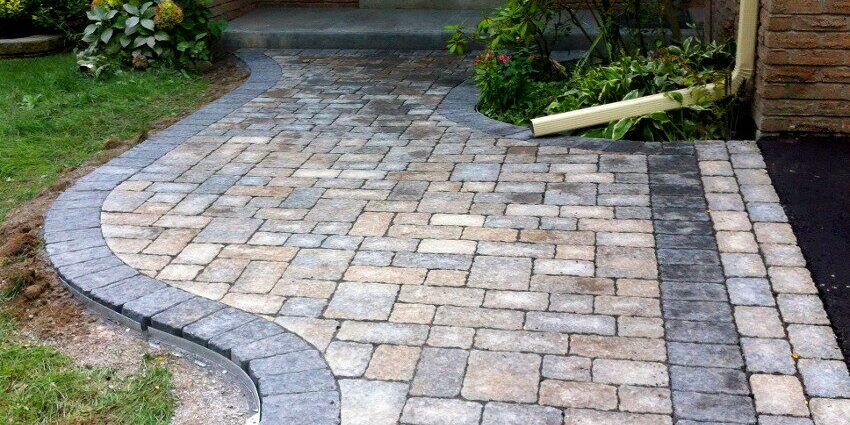
What Is an Interlock Driveway?
An interlock driveway is built from individual pavers, usually concrete, brick or natural stone, set on a compacted granular base and a thin bedding layer. Joint sand fills the gaps, and edge restraints hold the border. Together they let the pavers lock together and share loads from vehicles. Because each unit is separate, a stained or damaged paver can be replaced without removing the whole driveway.
Interlock Driveway Designs and Ideas
Pattern, colour and border choices set the look of the driveway. These interlocking design ideas are the ones we are asked about most.
Herringbone Pattern
The standard choice for driveways. Pavers are laid at an angle in a zig-zag arrangement, and the angled joints resist movement from braking and turning vehicles. It suits traditional and modern homes.
Running Bond Pattern
Rectangular pavers laid in staggered rows give a clean, linear look. It can make a narrow driveway read wider and suits contemporary homes, especially for lighter traffic.
Basketweave Pattern
Pairs of pavers alternate direction to create a woven look. It reads as traditional and works well as a field pattern or an accent panel.
Circular and Fan Patterns
Concentric rings or fan layouts create a focal point near the garage or entrance. They need more cutting and skilled layout, and work best on larger driveways or turnarounds.
Borders and Inlays
A border in a contrasting colour frames the driveway and defines its edges. Inlaid bands or medallions add detail without changing the main field pattern.
Modern Interlock Driveway Designs
Clean lines, a limited colour range and tight joints give a modern look. Keep large, thin slabs for walkways and patios, since driveways carry heavier loads and small to medium pavers are the safer choice.
Mixed Materials
Pairing concrete pavers with natural stone borders or a stone walkway adds contrast. Check that all materials suit vehicle loads where they meet the driveway.
Permeable Pavers
Wider, open joints filled with clean stone let water move through the surface and into an open-graded base. They suit sites where stormwater runoff is a concern.
For walkways and patios, see our guide on how to use interlocking pavers in landscape design, which covers interlock walkway designs and outdoor living areas.
Paver and Interlocking Stone Options
- Concrete pavers: The most common interlocking stones for driveways. Available in many shapes, sizes and colours, and made for vehicle loads.
- Brick pavers: An interlocking brick driveway has a traditional look with warm colours that age well. Brick is also used as an accent next to concrete pavers.
- Natural stone: Interlock stone such as granite and similar stones give a premium, one-of-a-kind appearance. Each piece differs, so layout and sourcing take care.
- Permeable pavers: Designed to let water drain through joints into the base below.
Compare the types in more detail on our residential interlocking page.
What Makes an Interlock Driveway Last in Ontario
Most driveway problems, such as sinking, rutting and shifting pavers, start below the surface. Four things matter most:
- Base depth and compaction. Unilock suggests typically 10 to 14 inches of compacted granular base for driveways, compared with 6 to 8 inches for patios and walkways, with about 1 inch of bedding sand on top. Soil and drainage change the number, so an assessment on site is needed.
- Drainage. The surface should slope away from the house and the base should let water leave. Standing water and freeze-thaw cycles move pavers.
- Edge restraints. Unilock calls edge restraints a critical element for durability. They are secured into the base and keep the pavers from spreading under traffic.
- Joint sand and sealing. Joint material keeps pavers locked and keeps weeds out. Sealing is optional, and if you do it, Unilock suggests reapplying every 3 to 5 years.
These points are why it pays to hire an installer trained in interlocking pavement. Land-Con is ICPI certified.
Pros and Cons of Interlock Driveways
Advantages
- Individual pavers can be replaced if one is damaged or stained.
- Pavers flex with small ground movement, while poured concrete can crack with freeze-thaw cycles, according to Unilock.
- Wide choice of patterns, colours and stone.
- Surface can be cleaned and re-levelled without full replacement.
Disadvantages
- Higher upfront cost than asphalt, because of the deeper base and labour.
- Weeds can grow in joints, and joint sand can wash out if the driveway is not maintained.
- Oil and fluid leaks can stain unsealed pavers.
- Snow removal needs care. A plow or shovel blade with a rubber or poly edge is kinder to the surface than bare steel.
For a longer look at the benefits, read why you should consider an interlocking driveway and the benefits of constructing interlocking concrete pavers.
Interlock vs Concrete vs Asphalt
- Interlock: Highest upfront cost, the most design options and repairs one paver at a time.
- Poured concrete: A single slab with a cleaner look, but cracks cannot be repaired invisibly. See our stamped concrete service if you prefer a poured finish.
- Asphalt: The lowest upfront cost, with fewer design choices and a surface that needs periodic resealing.
Landscaping Around an Interlock Driveway
Borders, planting beds and lighting make the driveway part of the whole front yard. Use curbing or stone edging to define the edge, low-maintenance planting that suits Toronto winters, and path or accent lighting for safety. See our front yard landscaping designs, our landscape lighting service and landscape design in Toronto for ideas.
How to Choose an Interlock Contractor in Toronto
- Ask if the installer is ICPI certified.
- Ask for a written scope that lists excavation depth, base material, edge restraint and joint sand.
- Look at completed driveways and ask for references.
- Confirm who handles drainage, permits and cleanup.
- Ask about the warranty. Land-Con gives a 5-year workmanship warranty.
Frequently Asked Questions
What is an interlock driveway?
An interlock driveway is a driveway paved with individual concrete, brick or natural stone pavers that lock together through joint sand and edge restraints. The pavers share load across the surface, and a damaged paver can be lifted out and replaced without redoing the whole driveway. In Ontario, people say “interlock”, “interlocking stone” or “interlocking driveway” for this type of paving.
What is the best interlock pattern for a driveway?
Herringbone is generally recommended for driveways because its angled joints resist shifting under vehicle traffic. Running bond and basketweave also work for lighter use. Decorative patterns such as circles and borders work well as accents around a herringbone field.
How deep should the base be for an interlock driveway?
Unilock, a paver manufacturer, gives typical guidance of 10 to 14 inches of compacted granular base for driveways, compared with 6 to 8 inches for patios and walkways, plus about 1 inch of bedding sand. The right depth depends on soil and drainage, so a contractor should assess your site.
Do I need to seal interlocking pavers?
Sealing is optional. It can deepen colour, help resist staining and protect the joint sand, but pavers are made to perform without it. If you seal, Unilock suggests reapplying every 3 to 5 years.
Is an interlock driveway better than concrete?
It depends on priorities. Poured concrete is a single slab and can crack with freeze-thaw cycles, while pavers move slightly and can be repaired one at a time. Interlock usually costs more up front and needs some joint maintenance. Ask for a written comparison for your property.
Can I use large-format pavers on a driveway?
Large, thin slabs are more prone to cracking under vehicle loads, according to Unilock, so small to medium pavers are usually preferred for driveways. Large formats suit walkways, patios and pool surrounds better.
How much does an interlock driveway cost?
Cost depends on driveway size, paver or stone choice, excavation depth, drainage, edging and any curved or custom pattern work. Base preparation and labour are a significant part of the total. Request an itemised written quote that lists these items.
How long does interlock driveway installation take?
A typical residential driveway often takes several days to a week or more, depending on size, access, weather and design complexity. Your contractor should give you a written schedule before work begins.
Plan Your Interlock Driveway With Land-Con
Land-Con designs and builds interlock driveways, walkways and patios across Toronto and the GTA, together with the landscaping around them. Learn more about our residential interlocking service or our backyard and front yard design-build service. Call 416.504.5263 or email info@landcon.ca for a free consultation.