


Land-Con | Landscape Ontario and BILD member, ICPI certified | Last updated: November 12, 2026
In December the sun sets before 5 pm in Toronto, and the yard stays dark for well over fourteen hours. Good lighting gives that time back. It lights the steps you use every evening, makes the front of the house look finished from the street and turns a deck or patio into a place you can use at night.
If you are looking for a landscape lighting company, an outdoor lighting installer or a lighting designer in Toronto, Land-Con can design the lighting and install it as part of the landscape, so fixtures, cable routes and planting are planned together. We work with homeowners and with commercial and condo properties across the GTA.
Book a Free Site VisitCall 416.504.5263

Landscape Lighting Services in Toronto
No two properties get lit the same way. A narrow city lot needs a different layout from a half-acre backyard, and pool lighting needs fixtures that a front driveway never does. These are the areas we light most often.
Curb Appeal and Front Facade
Wall washing, grazing and accent lights that show off the architecture and planting from the street.
Garden and Tree Lighting
Uplights and spotlights that give planting beds, shrubs and mature trees depth and texture.
Deck and Patio Lighting
Step lights, post caps and recessed fixtures that make a deck or patio usable for evening entertaining.
Pool and Water Feature Lighting
Underwater and perimeter lighting designed for safety and for the way the pool looks at night.
Path and Stair Lighting
Low-voltage fixtures spaced along walkways and steps to improve safety. It is often the first layer homeowners install.
Driveway and Entrance Lighting
Fixtures that mark the driveway edge, the entry and the front door for both safety and a welcoming approach.
Landscape Lighting Design: The Three Layers
A common mistake is to buy lights first and decide where they go later. A designed system works in layers that overlap.
Path and Safety
Low, shielded fixtures along walks, steps and driveway edges. Their job is to show you where to put your feet, not to light the whole yard.
Accent
Focused light on things worth seeing: a tree, a stone wall, a water feature or the face of the house. This layer creates depth.
Ambient
Soft, wider light where people sit and talk, such as a deck, patio or pergola. It is what makes the space feel like a room.
Within those layers we use a handful of techniques. Uplighting washes a tree or wall from below, downlighting (or moonlighting) casts soft light and shadow from above, grazing rakes light across textured stone or brick, and silhouetting puts a feature against a lit backdrop. The skill is in choosing which to use where, and in hiding the source so you see the effect and not the fixture. Our post on common landscape lighting mistakes covers the errors we are most often asked to fix.
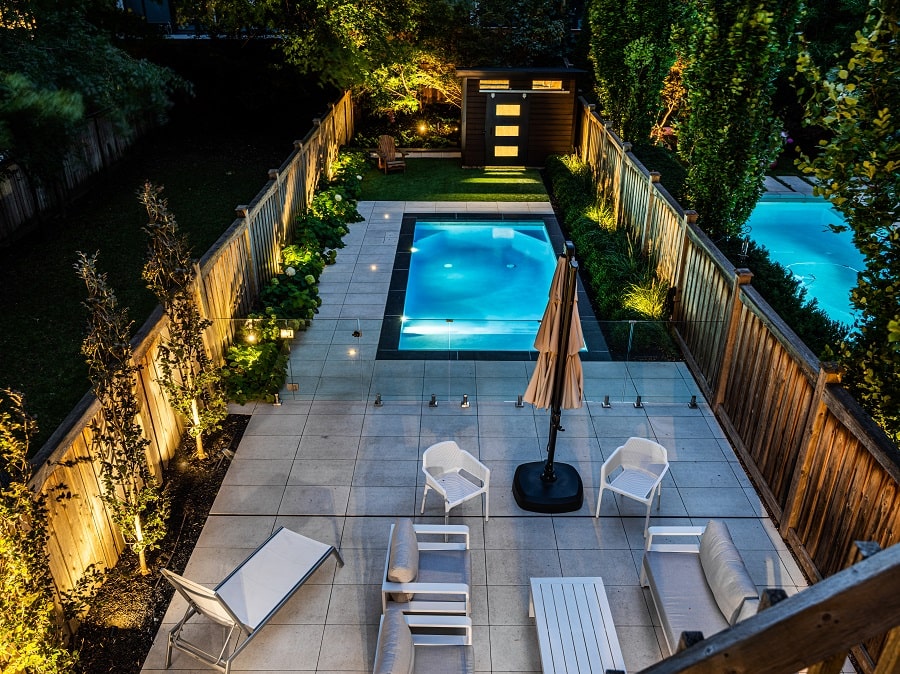
What a Landscape Lighting System Is Made Of
Most residential systems are low-voltage LED. The parts are simple, and the quality of each one affects how long the system lasts.
- Transformer. It steps household current down to low voltage and holds the timer or photocell. It is sized for the total load, with some capacity left for future fixtures.
- Fixtures. Path lights, spotlights, well lights, wall lights, step lights and underwater units. Solid brass, copper or cast aluminum generally outlast thin plastic.
- Cable and connections. Buried cable with weatherproof connections. Cable routes and splices are where many failures start, so they are planned and installed carefully.
- Controls. Timers, photocells and dimmers let you set when the lights come on and how bright they are, and smart controls can adjust seasonally.
If you are weighing wired lighting against solar, our comparison of solar and wired LED landscape lighting lays out what each can and cannot do in Ontario.

Lighting Design Details That Make the Difference
- Hide the source. Shield fixtures and aim them away from eye level so glare does not wash out the view.
- Overlap, do not flood. Pools of light that overlap give a gentle, even effect, and one bright floodlight flattens everything it touches.
- Use warm light. Warm white fixtures flatter stone, brick and plants and feel inviting.
- Light by zone. Separate circuits for the front, the deck and the garden let you switch each area on its own.
- Respect the neighbours. Aim light down and into your own yard, not across the property line.
- Plan for growth. Trees and shrubs grow into fixture beams, so positions and heights allow for it.
Permits, Electrical Work and Safety in Ontario
Landscape lighting is electrical work, so Ontario’s electrical rules apply. These come from the Electrical Safety Authority (ESA) and Ontario One Call, and they change over time, so we confirm the current requirement before we start.
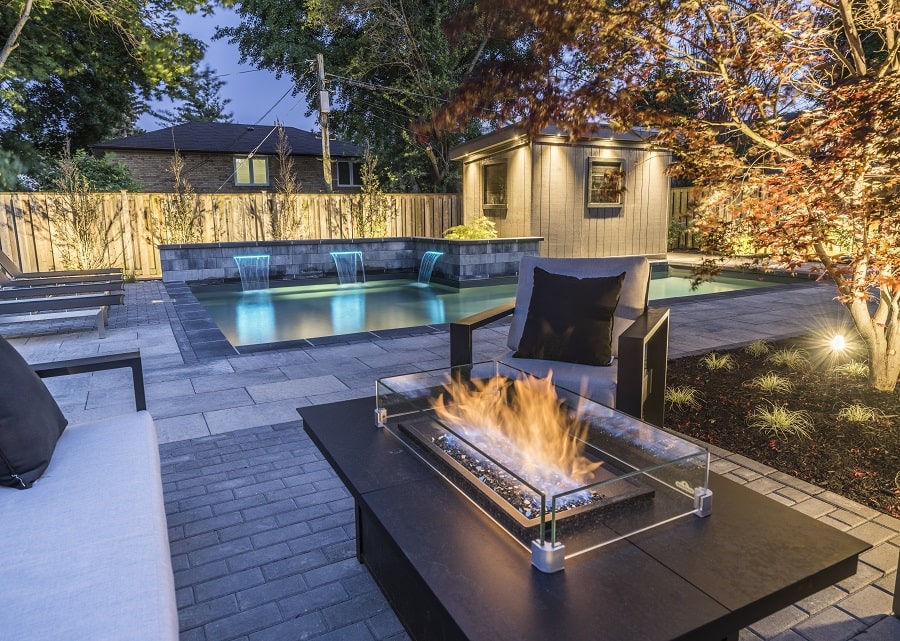
Landscape Lighting for Ontario Winters
Winter is when many homeowners notice their lighting most. Fixtures and cable need to handle freeze-thaw cycles, snow and road salt spray, and the layout needs to work when snow changes the landscape.
- Fixture heights. Low path lights can disappear under snow, so we consider taller fixtures where drifts form.
- Timers and photocells. Sunsets come early, so schedules should follow the season, not a fixed clock time.
- Weather-rated components. Sealed fixtures, weatherproof connections and buried cable stand up to repeated freezing.
- Safe winter routes. Lit steps, walkways and driveway edges make icy conditions easier to read.
Our post on outdoor lighting tips for winter goes deeper on seasonal care.
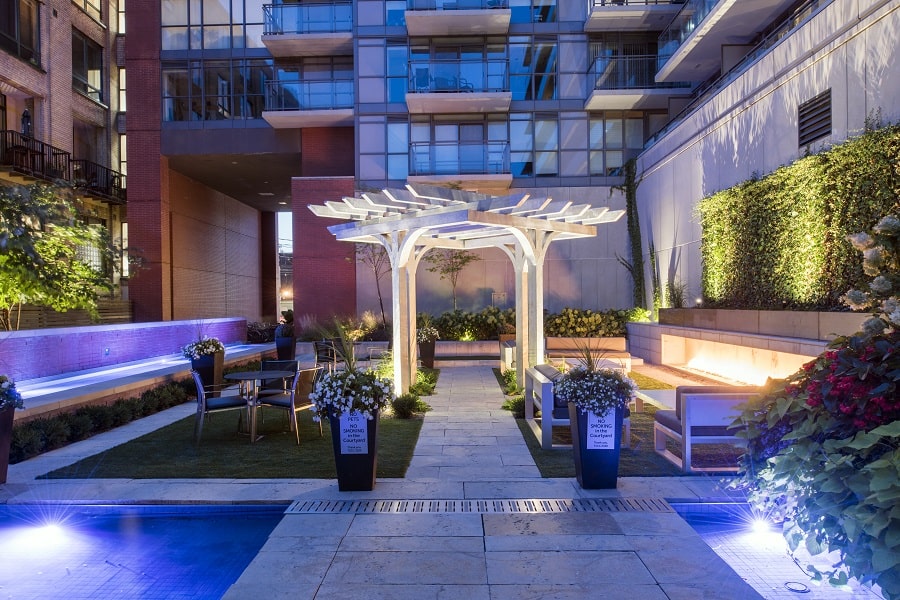
What Affects the Cost of Landscape Lighting
Lighting costs vary widely, so we explain the drivers instead of quoting a figure before we have seen the property. The main ones are the area covered, the number of fixtures and zones, the fixture and transformer quality, how much trenching or hardscape cutting the cable routes need and the controls you choose. Lighting planned with a landscape project is often easier and less disruptive to install than lighting retrofitted afterward, because cable can go in before paving and planting. You get a written, itemized estimate after the site visit.
How We Design and Install Your Lighting
Every project follows our four-phase landscape design and construction process. For lighting it works like this.
- Consultation. We walk the property with you, ideally near dusk, and talk about how you use the space in the evening. We note the architecture, the planting, the sight lines and the power source.
- Design. We map fixture types and positions across the path, accent and ambient layers and plan the circuits and transformer location. You review the plan before anything is installed.
- Installation. Fixtures and cable are installed with as little disruption to the garden and hardscape as possible, with the electrical connection made by a licensed electrical contractor.
- Night walkthrough. We return after dark to check the effect with you, adjust angles and brightness and set the timer.
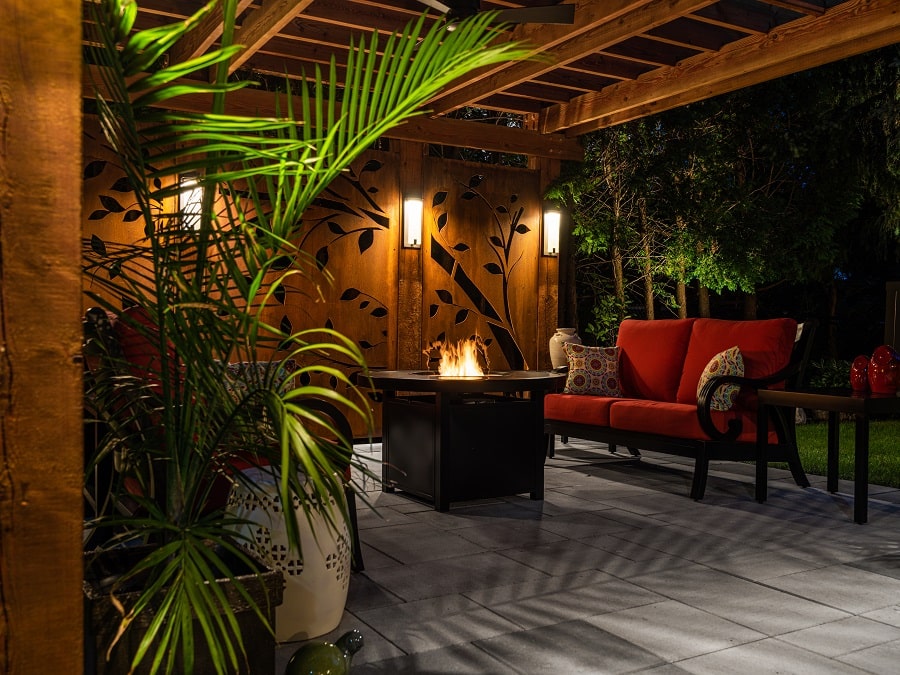
Why Homeowners Choose Land-Con for Landscape Lighting
- Lighting planned with the landscape. We can add lighting to a backyard landscaping project, a pool, a cabana or pergola or an outdoor kitchen, so cable and fixtures are built in rather than retrofitted.
- Design first. You see the plan before we install, and we adjust it with you.
- A night walkthrough. We tune the system after dark, when you can actually judge it.
Our landscape designers and architects lead each design. You can see finished work in our featured projects, read about our awards and learn more about the team on our about page. If you are deciding between doing it yourself and hiring, our guide to getting started with outdoor lighting installation explains the trade-offs.
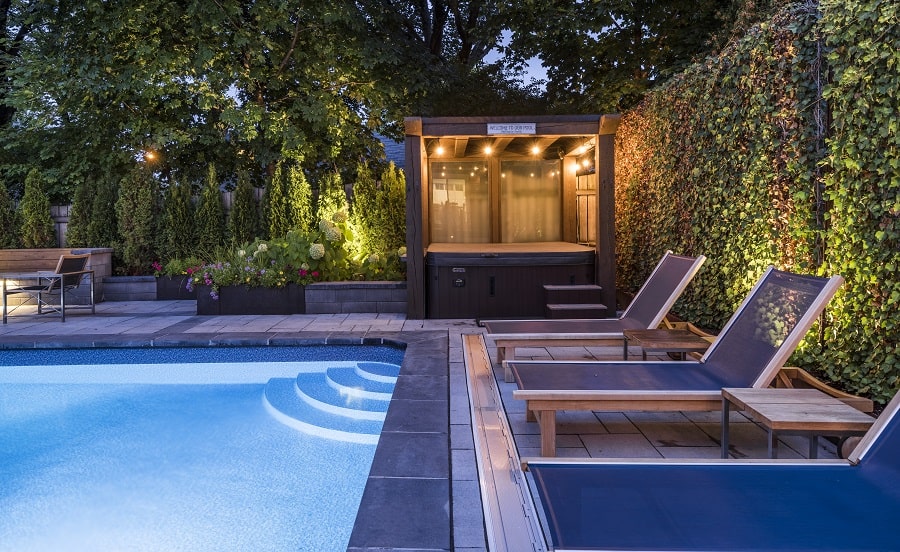
Landscape Lighting Installation Across the GTA
We design and install outdoor lighting in Toronto, Vaughan, Etobicoke, North York, Richmond Hill, Markham, Aurora, Pickering, Oakville, Mississauga, Burlington and across the Greater Toronto Area, for homes and for commercial and condo properties. Choose your area to see our local landscaping services.
- Toronto
- Vaughan
- Etobicoke
- North York
- Richmond Hill
- Markham
- Aurora
- Pickering
- Oakville
- Mississauga
- Burlington
For condo and commercial properties, see our guide to commercial lighting design and our commercial and condo landscaping service. Once your lighting is in, our maintenance checklist helps you keep it working.
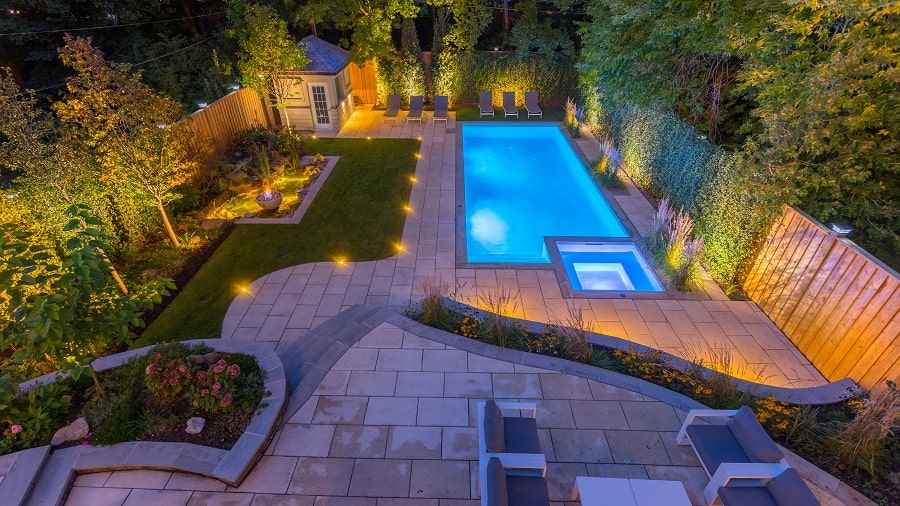
Frequently Asked Questions About Landscape Lighting
How much does landscape lighting cost in Toronto?
The cost depends on the size of the property, the number of fixtures and zones, the quality of the fixtures and transformer, the cable routes (trenching through gardens is easier than cutting through hardscape) and the controls you choose. Because every yard is different, we give you an itemized written estimate after a site visit instead of a general number over the phone.
Do I need a permit or a licensed electrician for outdoor lighting in Ontario?
Electrical permits in Ontario come from the Electrical Safety Authority (ESA), not the City, and the ESA says almost all electrical work must be done by a Licensed Electrical Contractor. Landscape Ontario reported in 2016 that the ESA expects a yard and garden permit for landscape lighting, counted by transformer. Rules change, so we confirm the current requirement before we start and use a licensed contractor for the electrical connection.
How many lights will my yard need?
There is no fixed number. It depends on the size of the yard, the layers you want and what you want to see at night. A narrow city lot might need a dozen well-aimed fixtures, while a large property with a pool, a deck and mature trees needs far more. We walk the property, mark fixture positions and set the count from the design, not the other way around.
What is the difference between low-voltage and line-voltage landscape lighting?
Low-voltage systems use a transformer to step household current down to a low voltage, typically 12 volts, which makes the fixtures safer to handle, easier to adjust and gentler on energy use. Line-voltage fixtures run at full household voltage and need conduit, boxes and more extensive electrical work. Most residential landscape lighting is low-voltage, with line-voltage reserved for specific cases such as post lights or large floodlights.
Is solar landscape lighting a good alternative to wired lighting?
Solar can work for small accents in sunny spots with no practical way to run cable. It tends to be dimmer, less consistent and shorter-lived than a wired LED system, particularly in Ontario winters with short days and snow cover. Our comparison of solar and wired LED lighting goes through the trade-offs.
What colour temperature is best for outdoor lighting?
Warm white, roughly 2700K to 3000K, is the usual choice for homes because it flatters stone, brick and plants and feels inviting. Cooler light can look harsh in a residential yard, although it is sometimes used for security areas. We specify the colour temperature with the fixtures so the whole yard matches.
Does landscape lighting work through the Ontario winter?
Yes. Quality fixtures and cable are built for freeze-thaw cycles, and winter nights are long, so lighting gets more use, not less. Snow can bury low fixtures, and timers need adjusting for early sunsets, so we plan fixture heights and controls with winter in mind. Our winter lighting tips cover seasonal care.
How long does a landscape lighting installation take?
A small front-yard or pathway project can be finished much faster than a full-property system with trenching through hardscape, pool and deck fixtures and several zones. Design time, permits where required, utility locates and fixture lead times all affect the schedule, and Ontario locates can take up to five business days. Your written estimate sets out the timeline.
Can you light a pool, deck or water feature safely?
Yes, with the right fixtures and electrical protection. Pool and water-feature lighting uses units rated for wet locations and is connected by licensed electrical trades, and deck lighting is planned with the framing so cable and fixtures are hidden. Our pool lighting guide explains the options.
How do I maintain landscape lighting?
Wipe lenses a couple of times a year, trim plants that grow in front of fixtures, check that fixtures are still aimed correctly and make sure the transformer, timer and GFCI outlet work. LED fixtures last far longer than halogen, so bulb changes are rare. Our maintenance checklist lists what to check each season.
Do you install lighting for commercial properties as well?
Yes. We design and install lighting for homes and for commercial and condo properties, where the priorities are safety, access routes, signage and a welcoming approach. Our guide to commercial lighting design explains those priorities.
Which areas do you serve for landscape lighting?
We design and install landscape lighting across Toronto and the Greater Toronto Area, including Vaughan, Etobicoke, North York, Richmond Hill, Markham, Aurora, Pickering, Oakville, Mississauga and Burlington.
Start Your Landscape Lighting Project
Book a free site visit and we will look at your property, talk through how you use it at night and explain what is possible. You get a clear plan and a written estimate, with no obligation.
Or call 416.504.5263 or email info@landcon.ca.