Owning a home on a ravine lot in Toronto is a dream for many. You get privacy, stunning views, and a direct connection to nature. But landscaping these unique properties comes with a specific set of challenges. You cannot just start digging. There are strict rules to follow.
If you are looking for a landscaping company in Toronto to transform your ravine property, you need a team that understands the laws as well as the design. Below, we break down the essential bylaws, complex permit processes, and top design trends for 2026.
The Ravine and Natural Feature Protection Bylaw
Toronto has a unique landscape. A massive ravine system carves the city. To protect this, the City of Toronto enforces the Ravine and Natural Feature Protection (RNFP) Bylaw. This law protects the natural landforms and the trees that grow on them.
As expert landscapers in Toronto, we deal with this bylaw constantly. It applies to many properties that back onto ravines. The goal of the bylaw is to stop erosion and protect the ecosystem.
What Does the Bylaw Restrict?
The bylaw is very specific about what you can and cannot do.
- Tree Removal: You cannot cut down trees without a permit. This applies to trees of almost any size in the protected area.
- Grade Changes: You cannot change the slope of the land. Adding fill or digging out soil is strictly regulated.
- Dumping: You cannot dump garden waste, leaves, or construction debris into the ravine.
- Structures: Building decks, retaining walls, or pools often requires special approval.
If your property is in this zone, you are not just dealing with the City. You might also need to work with the TRCA (Toronto and Region Conservation Authority). They look at flood risks and slope stability.
Why You Need a Permit Before You Dig
Many homeowners make the mistake of starting work without checking the maps. This can lead to huge fines. The fines for damaging a protected tree or altering a ravine slope can be thousands of dollars.
A professional landscaping company in Toronto, such as LandCon, will always check the maps first. We look to see if your property falls within the TRC- regulated area. If it does, we must apply for a permit before we move a single shovel of dirt.
The Permit Process Made Simple
The process might sound scary, but it is manageable with the right help.
- Site Survey: We start with an up-to-date survey of your lot. This shows the “top of bank” and where the stable slope begins.
- Arborist Report: A certified arborist checks the health and species of every tree.
- Geotechnical Study: For steep slopes, an engineer ensures that the land is stable enough for your project.
- Submission: We submit these plans to Urban Forestry and the TRCA.
This process takes time. It is best to start planning your ravine project in the winter. This ensures you are ready to build by spring or summer.
Design Challenges on Ravine Lots
Ravine lots are beautiful, but they are technically difficult. The ground is often sloped. The soil might be loose. Access to the backyard can be tight.
Slope Stabilization
The biggest challenge is keeping the ground in place. Erosion is a constant threat. Rainwater runs down the hill and washes soil away. Toronto’s Landscapers use several methods to fix this.
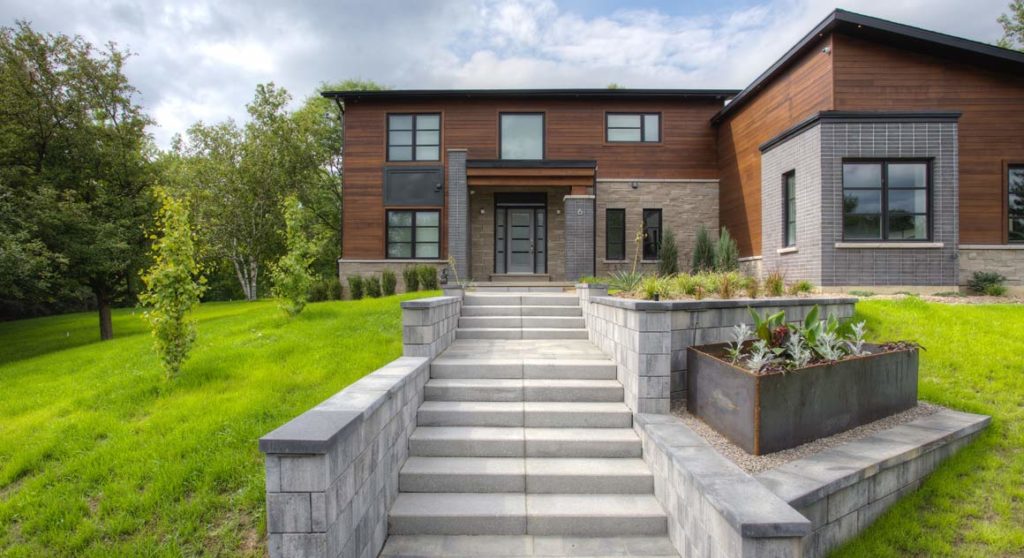
- Retaining Walls: These are the most common solution. We build walls to create flat terraces. This stops soil from sliding and gives you usable space.
- Deep Rooted Plants: We plant specific shrubs and trees. Their roots act like a net to hold the soil together.
- Drainage Systems: We install French drains and catch basins. These redirect water away from the slope to prevent washouts.
Accessing the Site
Getting heavy machinery into a ravine backyard is hard. Sometimes the side of the house is too narrow for a bobcat. In these cases, we might use a crane to lift materials over the house. This sounds extreme, but it is a standard practice for a high-end landscaping company in Toronto. It protects your driveway and front yard from damage.
Top Design Ideas for Ravine Lots in 2026
Now that we have covered the boring rules, let’s talk about design. Ravine lots offer amazing potential. The goal is to blend your yard with the natural forest behind it. Here are the top trends we are seeing for 2026.
1. The Multi-Level Terrace
Effective sloped yard landscaping relies on terraces. Instead of one steep hill, imagine three flat levels.
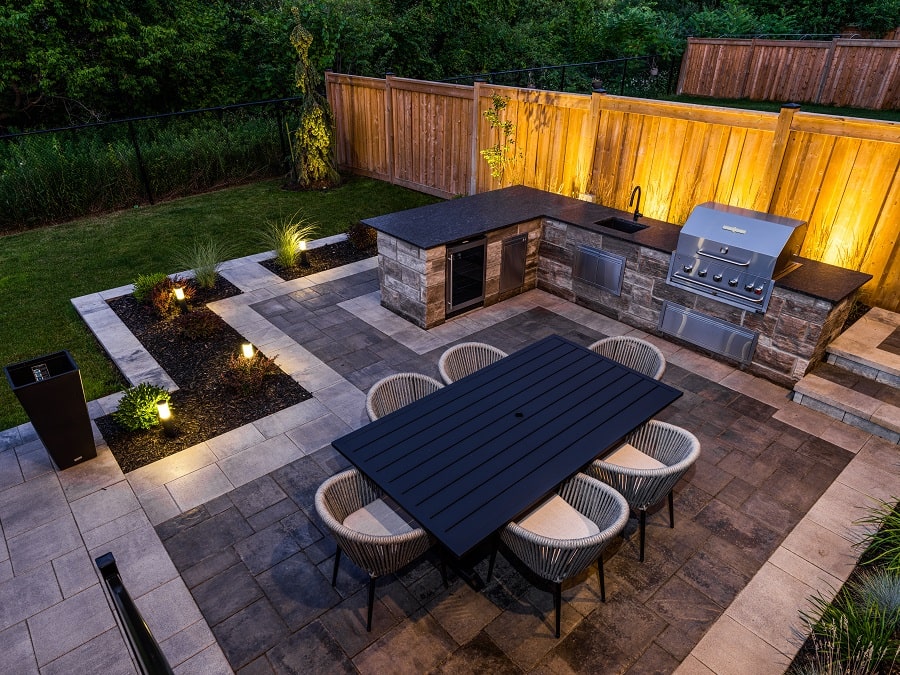
- Top Level: This is usually a patio near the house. It is perfect for dining and an outdoor kitchen.
- Middle Level: This could be a lounge area with a fire pit. It feels more private and secluded.
- Bottom Level: This area blends into the ravine. It might have a natural path or a garden bench.
Using different levels makes the yard feel bigger. It turns a useless slope into three distinct rooms for entertaining.
2. Infinity Edge Pools
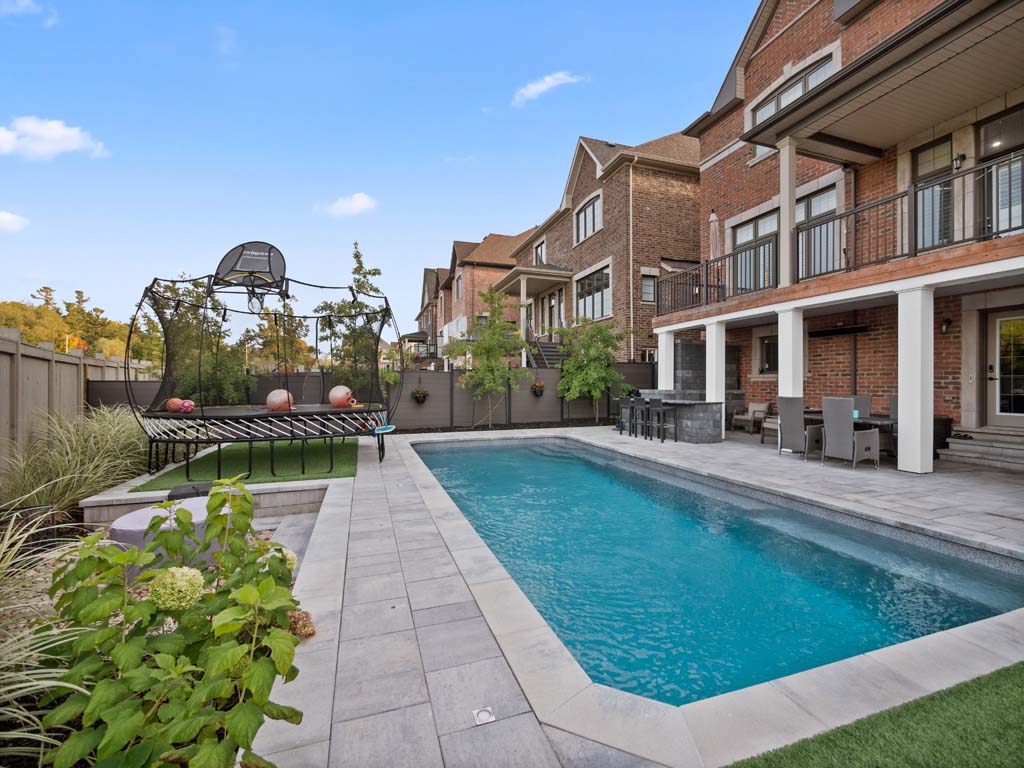
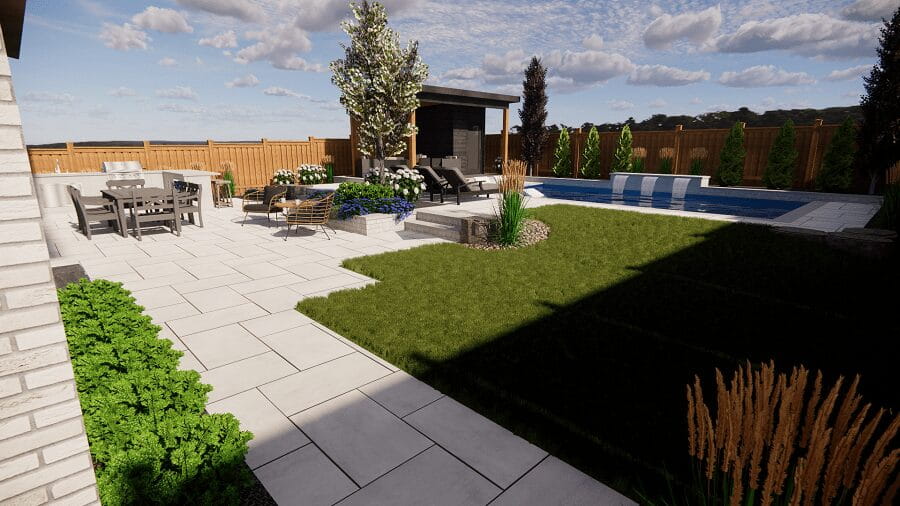
If you have the budget and the space, an infinity pool is a stunning choice. The edge of the pool seems to drop off into the forest. This connects the water with the trees. It creates a resort-like feeling right in the city.
Building a pool on a slope requires deep piles and strong engineering. But the visual result is unmatched. It is a signature look for luxury landscaping projects in Toronto.
3. Native Planting Schemes
The TRCA often requires you to plant native species. This is actually a design bonus. Native plants are tough. They survive Toronto winters and hot summers. They also support local birds and butterflies.
Popular choices for 2026 include:
- Serviceberry: A small tree with beautiful white flowers in spring.
- Dogwood: Shrubs with bright red stems that look great in winter.
- Ferns: Perfect for the shady parts of the ravine.
- Sumac: fast-growing and amazing for holding soil on slopes.
We design gardens that look lush and wild, not manicured and stiff. This wild garden look is very trendy right now.
4. Glass Railings
You do not want to block your view. Traditional wood fences can hide the ravine. Glass railings are the solution. We install them on decks and retaining walls. They provide safety without blocking the sightlines. You can sit on your patio and see all the way down into the valley.
5. Destination Fire Pits
Create a reason to walk down the hill. A fire pit area at the bottom of the slope is a great destination. We use natural stone to create a rustic seating area. It feels like you are camping in the woods, even though you are in your own backyard.
Lighting is key here. We use soft path lights to guide the way. The walk down to the fire pit becomes part of the experience.
Material Choices for Ravine Landscaping in Toronto
The materials you choose matter. They need to stand up to the elements. They should also blend with the natural surroundings.
Armour Stone
Armour stone is a favourite for landscapers in Toronto. These are massive blocks of limestone. They are heavy and durable. We use them for large retaining walls. They look natural, like they have always been there. They are much better than concrete blocks for a ravine setting.
Permeable Pavers
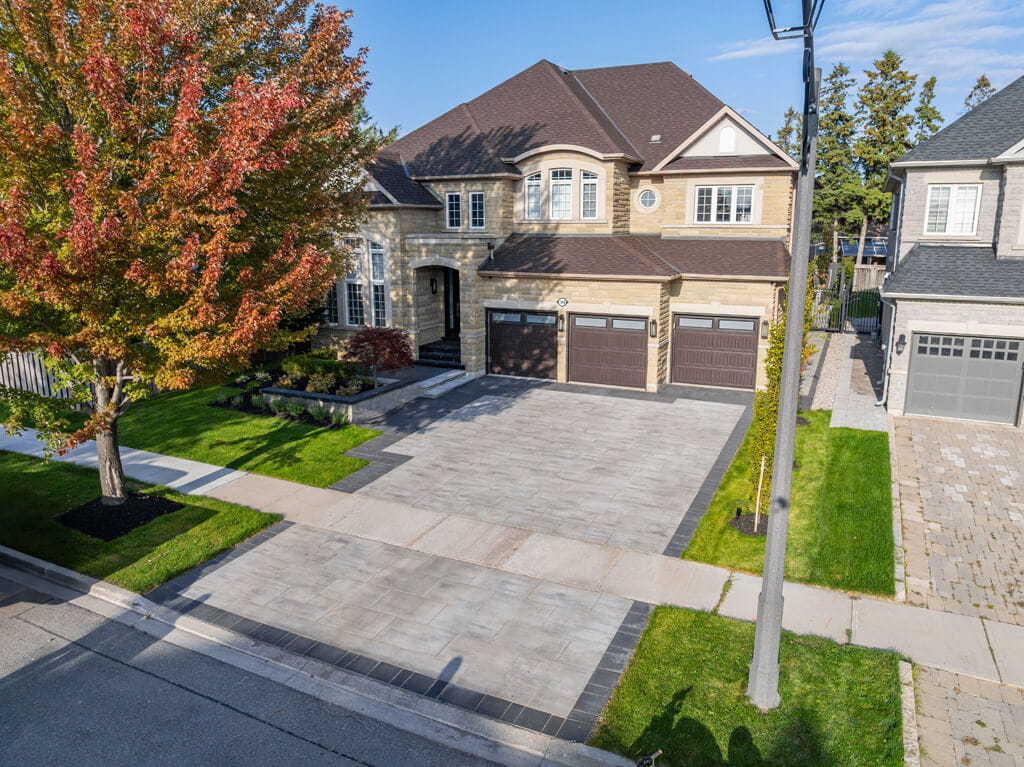
Drainage is critical near a ravine. These porous stones enable rainwater to filter directly back into the earth. They do not create runoff. This helps keep the slope stable. It also keeps the City and TRCA happy. There are many stylish options available now that look just like traditional stone.
Corten Steel
This is a trendy material for 2026. Corten steel is a metal that develops a rust-like patina. It looks orange and earthy. We use it for planter boxes and small retaining walls. The rusty colour looks beautiful against the green leaves of the ravine.
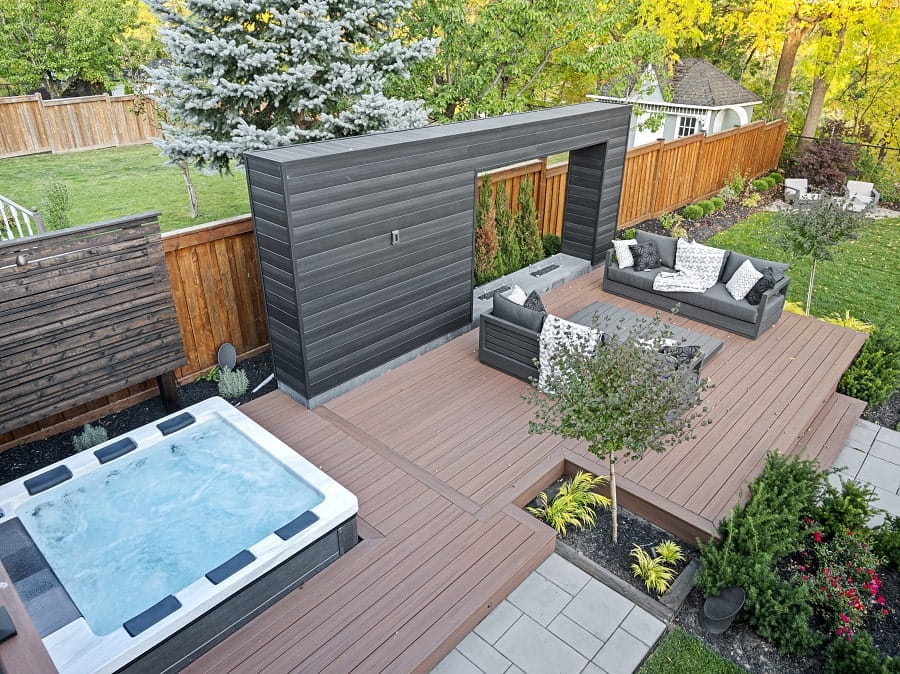
Composite Decking
Wood decks can rot in the damp environment of a ravine. Composite decking is a better choice. It resists moisture and mould. It stays looking new for decades with very little maintenance.
Hiring the Right Landscaping Company in Toronto
Landscaping a ravine lot is not a DIY job. The risks are too high. You need a professional team. When you look for a landscaping company in Toronto, ask them the right questions.
- Have you worked with the TRCA before?
- Do you have an arborist on your team?
- Can you show me examples of other ravine projects?
- How will you manage drainage on the slope?
LandCon has years of experience with these properties. We know the inspectors. We know the rules. We understand the exact criteria city inspectors look for to grant project approval.
The Value of Professional Design
A well-designed ravine lot adds huge value to your home. It turns a problem area into a selling feature. Real estate agents in Toronto know the value of a usable backyard.
Investing in professional landscaping gives you a high return. You get a space you can enjoy every day. You also get peace of mind knowing the slope is stable and safe.
Maintaining Your Ravine Oasis
Once the project is done, maintenance is key. Ravines are wild places. Weeds and invasive species can take over quickly.
- Invasive Species Control: Plants like Garlic Mustard and Dog Strangling Vine are common in Toronto ravines. They need to be removed regularly.
- Pruning: Trees and shrubs need pruning to keep views open.
- Drainage Checks: We recommend checking drains every spring to make sure they are not clogged with leaves.
Many of our clients hire us for ongoing maintenance. We keep the wild part of the garden under control.
Conclusion
Your ravine lot is a precious asset. It connects you to the natural beauty of Toronto. But it needs to be treated with respect. The rules and permits are there to protect the land.
Do not let the regulations scare you. With the right landscaping company in Toronto, you can navigate the process smoothly. We can help you build a safe, legal, and stunning backyard oasis.
Frequently Asked Questions about Ravine Landscaping
1. Do I always need a permit for a ravine lot?
Not always, but usually. If you are digging, changing the grade, or removing trees, you likely need a permit. It is always safer to check with the City or a professional first.
2. Can I build a pool on a ravine lot?
Yes, in many cases you can. It requires special engineering and permits. It is best to consult a professional and experienced landscaping company in Toronto to get personalized solution for your property.
3. What happens if I landscape without a permit?
You risk a Stop Work Order and heavy fines. You might also be forced to restore the land to its original state at your own cost.
4. How long does the permit process take?
Most permit applications typically move through the municipal system over a three-to-six-month window. It depends on the complexity of the project and how busy the City offices are.
5. Can LandCon handle the permits for me?
Yes. As your chosen landscaping company in Toronto, we handle the entire process. We deal with the paperwork, the drawings, and the inspectors. Our team manages every detail so you can enjoy a completely stress-free experience.
Why Choose LandCon?
As a premier landscaping company in Toronto, LandCon specializes in the unique challenges of ravine lots, steep slopes, and strict municipal bylaws. We possess the specialized equipment and expertise required to navigate complex projects that other firms might turn away. Our dedicated team, comprising creative designers, project managers, and skilled tradespeople, treats your property with the same care and respect as our own. We transform difficult terrain into breathtaking, usable landscapes, giving you total peace of mind.
Beyond construction, we champion sustainable, eco-friendly design. We integrate advanced water management like rain gardens and bioswales, prioritize soil health with organic compost, and select plantings that support local pollinators. When you hire us, you are choosing a resilient garden that respects the ravine ecosystem for future generations.
If you are looking for landscapers in Toronto who deliver quality, sustainability, and results, look no further. Check out our Featured Projects to see the difference professional design makes.
Ready to unlock the potential of your property? Contact LandCon for a consultation. Let’s make your backyard the envy of the neighbourhood—the view from your new terrace will be worth it.