When planning a comprehensive landscaping design in Toronto, the materials you choose are just as necessary as the layout itself. One of the most common questions we receive from homeowners in neighbourhoods like High Park, Leaside, and The Beaches is: “Should I stick with traditional stone, or is it time to upgrade to permeable pavers?”
It is a valid question. For decades, traditional interlocking concrete pavers and natural flagstone have been the gold standard for driveways and patios. They offer classic beauty and a wide range of styles. However, as our city faces wetter springs, stricter stormwater bylaws, and increasingly volatile freeze-thaw cycles, a new contender has emerged as the smarter technical choice.
This guide explores the critical differences between permeable and traditional pavers, specifically tailored to the unique soil conditions and climate realities of the Greater Toronto Area (GTA). Whether you are looking to prevent basement flooding, secure a legal front-yard parking pad, or simply want a driveway that won’t heave next winter, understanding these differences is the first step in a successful project.
What is the Difference?
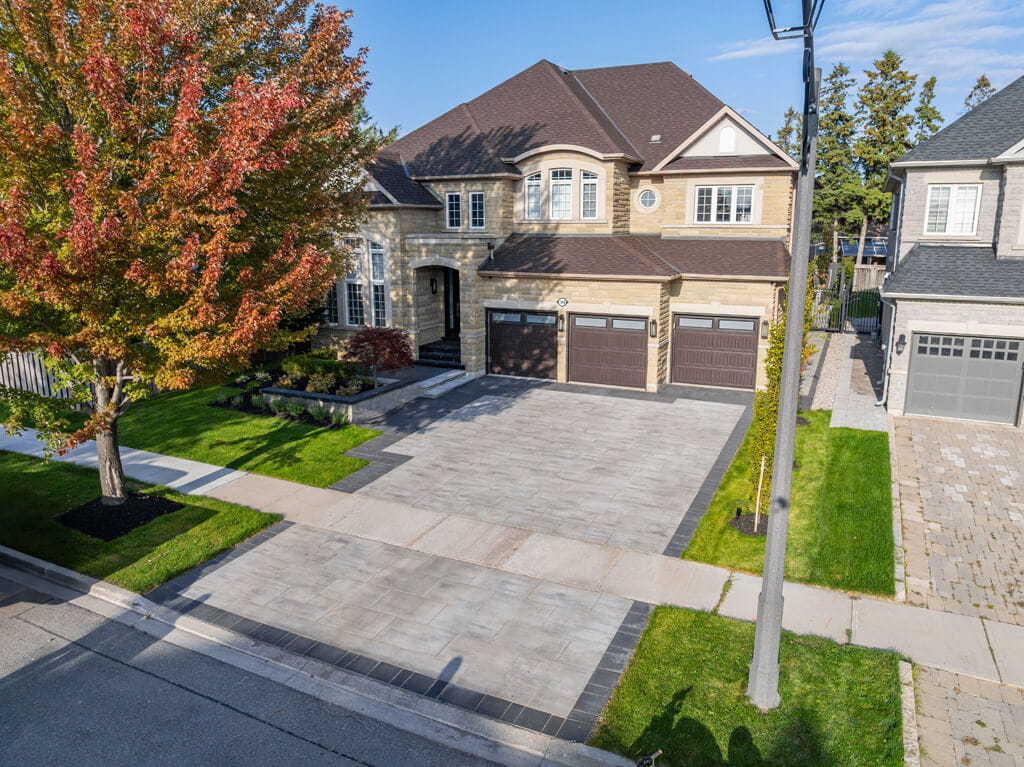
To the untrained eye, a permeable paver driveway and a traditional interlocking driveway can look nearly identical. The difference lies almost entirely in where the water goes and what lies beneath.
Traditional Pavers: Run-Off
Traditional systems are designed to shed water. The pavers (whether natural stone, concrete, or cobblestone) are solid and non-porous. They are laid tightly together, and the joints are filled with polymeric sand—a binding agent that hardens almost like concrete to prevent weeds and shifting.
When it rains on a traditional patio, the water cannot go through the stone. Instead, it must flow off the surface. A proper landscape design demands a strict 1-2% incline. This grading is essential to channel runoff into gardens or drains, ensuring water never accumulates against your foundation walls. If the grading settles over time, you end up with birdbaths (puddles) or, worse, water pooling against your foundation.
Permeable Pavers: Run-Through
Permeable interlocking concrete pavers (PICP) are designed to let water pass directly through the surface.
- The Joints: Instead of polymeric sand, the joints are wider and filled with a small, clean aggregate (crushed stone chips). This allows water to drain instantly between the stones.
- The Base: This is the magic component. Beneath the pavers sits a deep layer (usually 10-18 inches) of clear, open-graded gravel (without dirt or sand). This acts as a massive underground reservoir. Water flows through the pavers, enters this gravel tank, and slowly infiltrates back into the native soil (subgrade) below.
In simple terms, traditional pavers treat water as an enemy to be repelled; permeable pavers treat water as a resource to be managed.
The Toronto Climate Factor: Freeze-Thaw Durability
If you have lived in Toronto for more than one winter, you know the damage that the freeze-thaw cycle can do. In January and February, we often see temperatures swing from -10°C to +2°C and back again within 48 hours. This is arguably the biggest threat to any landscaping in Toronto.
The Heaving Problem with Traditional Stone
In a traditional system, the base layer is usually a mix of gravel and limestone screenings (crushed rock dust). When this base gets wet, either from groundwater rising or cracks in the surface, it holds onto moisture like a sponge. When that trapped moisture freezes, it expands. This hydraulic pressure pushes the pavers upward, creating uneven ridges and trip hazards, a process known as frost heave. Over the years of repeating this cycle, a perfectly flat driveway becomes wavy and uneven, often requiring a lift and relay repair service.
The Permeable Advantage
Permeable systems are virtually immune to frost heave. Because the base layer consists of clear stone (rocks with no sand/dirt in between), it cannot hold water by capillary action. Any water that enters the system drains down to the soil or a sub-drain before it can freeze near the surface. Furthermore, the lack of sand in the joints allows the pavers to move slightly with the earth’s natural shifts without cracking. The entire system breathes. For a Toronto homeowner investing $30,000+ into a driveway, this winter-proof engineering offers peace of mind that traditional materials simply cannot match.
Safety Bonus: Because water drains instantly, permeable driveways rarely develop black ice. While your neighbours’ traditional asphalt driveway turns into a skating rink after a flash freeze, a permeable surface remains textured and dry.
Stormwater Management & City Bylaws
One of the most compelling reasons to choose permeable pavers is not just durability. It’s legality. The City of Toronto has introduced aggressive zoning bylaws (specifically Zoning By-law 569-2013) to combat urban flooding and protect the water table.
The Soft Landscaping Challenge
Toronto zoning rules are strict about how much of your front yard can be hardscape (driveway/walkways) versus soft landscaping (grass/gardens).
- The Rule: Generally, at least 50% (and often up to 75% in some wards) of your front yard must be soft landscaping.
- The Misconception: Many homeowners believe permeable pavers count as soft landscaping. They do not. In the eyes of the City of Toronto zoning examiners, permeable pavers are still considered hard surface coverage.
However, they are often the only way to get approval for:
- Front Yard Parking Pads: If you are applying for a legal front yard parking license, the City frequently mandates the use of permeable paving materials to ensure the tree roots of city-owned trees (on the boulevard) get water and oxygen.
- Driveway Widening: If you are slightly over your hardscape limit, the specific Committee of Adjustment approvals may look more favourably on a plan that uses permeable technology because it relieves pressure on the city’s storm sewers.
Basement Flooding Protection
Many older Toronto homes have disconnected downspouts. If your downspout pours water onto a traditional patio, that water might run toward your foundation. With a permeable patio, that water disappears underground, away from your foundation walls. For homes in flood-prone zones (like the Don Valley flood plain areas), this is a critical layer of defence.
Aesthetic & Design Flexibility
A common myth we encounter at LandCon is that permeable pavers look industrial or ugly like the concrete grid blocks used in overflow parking lots 20 years ago. This is no longer true.
Manufacturers have revolutionized the aesthetic of permeable products.
- The Invisible Permeable: Many modern permeable pavers look identical to standard slate, flagstone, or modern smooth concrete. The permeability comes from widened joints (spacers) that are cleverly disguised by the stone chips.
- Modern Aesthetics: If you are aiming for a sleek, contemporary landscape design in Toronto, permeable options often look better. The use of small granite chip fillers (available in black, grey, or tan) creates a crisp, architectural look that contrasts beautifully with large slab pavers.
- No Moss/Weeds: Unlike traditional pavers, where the polymeric sand can wash out or crack, leading to moss growth, the granite chips in permeable systems are inhospitable to weeds. This keeps the driveway looking manicured with minimal effort.
Design Pro Tip: We often use a hybrid approach. We might use permeable pavers for the driveway (to handle heavy water loads and salt), but use traditional natural stone for the front porch and steps, ensuring a cohesive look that maximizes functionality.
Cost Analysis: Upfront vs. Long-Term Value
We believe in transparency. If you are comparing quotes for landscaping in Toronto, you will notice a price difference.
- Upfront Cost: Permeable paver installations typically cost 15% to 25% more than traditional interlocking stone.
- Why? It is not the stone itself, it is the labour and excavation. A traditional base requires 8-10 inches of excavation. A permeable base requires 12-18 inches of excavation and the importation of specialized clear stone aggregate. This means more trucking, more disposal fees, and more labour hours.
- Long-Term ROI: Despite the initial premium, permeable pavers often offer a better Return on Investment (ROI) over 10-15 years:
- Maintenance Savings: No need to top up polymeric sand every 2 years. No need to re-level sunken areas due to frost heave.
- Drainage Savings: You may save thousands by avoiding the installation of French drains, catch basins, and PVC piping that would be required to manage water runoff on a traditional patio.
- Lifespan: Permeable systems rarely crack. Because they are flexible pavements, they handle the weight of heavy SUVs better than rigid concrete or asphalt, which eventually crack under stress.
Maintenance: Winter Care in Ontario
Maintaining a permeable system is different from the seal and forget approach of traditional stone.
Winter Do’s and Don’ts
- DO NOT Use Sand: This is the golden rule. Never use sand for traction on a permeable driveway. The sand will clog the joints, turning your permeable driveway into a standard impermeable one.
- DO Use Proper Salt: You can use de-icing salt, but because the water drains away immediately, you actually need less salt than on asphalt. We recommend environmentally friendly, chloride-free de-icers to protect the concrete surface and adjacent gardens.
- Snow Plowing: Yes, you can plow permeable pavers. Most modern pavers have a chamfer (bevelled edge) or are smooth enough that plastic-bladed shovels and plows won’t catch on them.
Summer Cleaning
The only real maintenance required is keeping the joints clear of organic debris (leaves, soil).
- Vacuuming: Every 3-5 years, it is recommended to have the surface vacuum swept (using a shop vac or professional service) to remove fine dust from the top inch of the joints, and then top them up with fresh stone chips. This restores the 100% drainage rate.
Final Verdict: Which is Right for Your Property?
As a leader in Toronto landscaping design, we don’t believe in a one size fits all answer. Here is our checklist to help you decide:
Choose Traditional Pavers or Natural Stone If:
- You have a limited budget and need to maximize square footage.
- Your property already has excellent natural drainage (sandy soil, good slope).
- You are looking for a specific old-world cobblestone aesthetic that might not be available in a permeable catalogue.
- You are building a raised patio (where permeability is less relevant).
Choose Permeable Pavers If:
- You have a flat driveway or a reverse slope (where the driveway slopes toward the house).
- You live in an area with heavy clay soil that doesn’t drain well.
- You want to avoid the heaving and cracking cycle of Toronto winters.
- You are applying for a front pad parking license or need to meet strict environmental standards.
- You want a low-maintenance, weed-free surface that stays dry even during rainstorms.
Frequently Asked Questions (FAQs)
1. Do permeable pavers work in Toronto winters?
Absolutely. They are excellent for landscaping in Toronto because water drains instantly, preventing ice buildup and dangerous black ice. Unlike asphalt or traditional stone, the breathable base prevents frost heave, meaning your driveway won’t crack or become uneven during our freeze-thaw cycles.
2. Are permeable pavers more expensive than regular stone?
Yes, typically 15-20% more upfront. This cost isn’t for the pavers, but for the deeper, specialized gravel base required for drainage. However, a smart landscaping design uses them to save money long-term by eliminating the need for expensive drainage pipes and future repairs.
3. Do I need a permit for a permeable driveway in Toronto?
Often, yes. While permeable pavers manage stormwater, the City of Toronto generally still classifies them as hardscaping. However, using them is frequently a requirement to get approved for Front Yard Parking pads. Our landscape design team handles these permits to ensure full zoning compliance.
4. Do weeds grow between permeable pavers?
Minimal to none. Unlike traditional sand-filled joints that foster moss, permeable joints are filled with clean granite chips that discourage root growth. This makes them a low-maintenance choice for your landscaping design in Toronto, keeping your curb appeal high with just occasional sweeping.
5. Can permeable pavers prevent basement flooding?
Yes. By allowing rainwater to infiltrate the ground immediately rather than pooling against your foundation, they reduce hydrostatic pressure. For homes in Toronto’s flood-prone zones, incorporating permeable materials into your landscape design is a proactive step to protect your basement and property.
Partner With a Trusted Landscaping Company in Toronto
The choice between permeable and traditional stone is technical, but it defines the longevity of your investment. Don’t guess when it comes to your home’s foundation and drainage.
As a leading landscaping company in Toronto, LandCon specializes in navigating the city’s specific zoning bylaws and soil conditions. Whether you need a high-performance permeable driveway or a stunning traditional limestone patio, our team is ready to build it right.
Contact LandCon today for a consultation. Let’s discuss how we can future-proof your property with a design that handles our winters as beautifully as it handles our summers.